I like sablé cookies (not as much as chocolate chip cookies, but they’re a different animal altogether). Last month, I tried Miette’s chocolate sablé cookies, but that recipe failed completely – the cookies fell apart and I ended up with chocolate sand. It was great as a topping for lactose-free ice cream or yogurt, but not as a cookie. Then I tried Alice Medrich’s recipe, which was on Orangette: whole wheat sablés with cocoa nibs. And they were just perfect! I made them with margarine instead of butter (I agree that butter would taste better, but too much of it makes me sick); I wanted to use whole wheat pastry flour, but couldn’t find any, so I used all white whole wheat flour instead. The cookies were absolutely delicious; the whole wheat gives them a subtle, hearty taste, and the cocoa nibs add crunch and flavor without being too sweet. As a matter of fact, there isn’t much sugar in this recipe. The Engineer and I made the first batch disappear quickly, and I brought a second batch to my parents, both of whom just loved them. These sablés are an understated sensation. The recipe makes about 24 cookies (you can get more if you slice them more thinly, but that’s always a bit risky).
2 cups (9 oz.) whole wheat pastry flour, OR 1 cup (4.5 oz.) all-purpose flour plus 1 scant cup (4 oz.) whole wheat flour
14 Tbsp. (1 ¾ sticks) unsalted butter, softened (or vegan margarine)
½ cup (3 ½ oz.) sugar
¼ tsp. salt
1 tsp. vanilla extract
1/3 cup (about 1 ¼ oz.) roasted cacao nibs (I pan-roasted mine for a minute)
If using the two flours, combine them in a bowl, and mix with a whisk or fork.
In a medium bowl, with a large spoon or an electric mixer, beat the butter with the sugar, salt, and vanilla until smooth and creamy but not fluffy, about 1 minute (with the mixer). Scrape down the sides of the bowl with a spatula, and add the nibs. Beat briefly to incorporate. Add the flour, and mix until just incorporated. Scrap the dough into a mass and, if necessary, knead it a little with your hands to make sure that the flour is completely incorporated. Form the dough into a 12-by-2-inch log. Wrap and refrigerate for at least 2 hours, or overnight.
Set racks in the upper and lower thirds of the oven, and preheat the oven to 350°F. Line 2 cookie sheets with parchment paper.
Use a sharp knife to cut the cold dough log into ¼-inch-thick slices (I made mine about ½-inch thick). Place the cookies at least 1 ½ inches apart on the prepared sheet pans.
Bake for 12 to 14 minutes, or until the cookies are light golden brown at the edges, rotating the pans from top to bottom and front to back halfway through the baking time. Cool the cookies for a minute on the pans, then transfer them (with or without their parchment) to a rack to cool completely. Repeat with remaining dough. (Two batches were all I had, since I made the cookies thicker than ¼ inch.)
These cookies are good on the first day, but they’re best with a little age, after at least a day or two.
Saturday, June 30, 2012
Thursday, June 28, 2012
Joe Beef
L’Ingénieur et moi avons célébré notre anniversaire de mariage en soupant chez Joe Beef, où nous n’avions jamais encore eu la chance d’aller. C’était pas mal exactement ce à quoi je m’attendais, bons comme mauvais côtés.
Tout d’abord, le décor est beau mais relativement décontracté, plus bistro sombre et intime que restaurant chic (malgré les prix), avec des banquettes en cuir et des tables en bois foncé. On y joue de la musique de style blues, country ou vieux rock (Johnny Cash, par exemple); les enfants y sont les bienvenus. L’eau est servie dans d’anciennes bouteilles de lait, et les serviettes de table sont en fait des linges à vaisselle. Le menu est écrit sur une ardoise au mur, en français, et il n’existe aucune copie papier. Je comprends que c’est le style choisi sciemment par les propriétaires, mais je trouve ça un peu maladroit, car ça oblige les clients à rester debout devant le tableau pour choisir, tout en donnant aux clients près de l’ardoise l’impression d’être dévisagés. Personnellement, je suis aussi plus à l’aise avec un menu papier qu’avec un menu sur un mur ou au-dessus d’un comptoir, sans doute parce que je suis myope. J’ai aussi trouvé les tables trop rapprochées à mon goût, non seulement parce que c’est impossible de ne pas écouter les conversations de ses voisins (sachant qu’eux écoutent la nôtre), mais en plus parce qu’il fallait littéralement déplacer la table de quatre pieds dans l’allée pour que la personne assise sur la banquette puisse sortir de là! J’imagine que c’est fait ainsi pour accommoder deux tablées de deux personnes de plus chaque soir, bien normal vu le temps qu’il faut pour avoir une réservation, mais si c’était mon restaurant, j’enlèverai une des tables sous l’ardoise.
Côté serveurs, je n’ai vraiment rien à redire. Tout le monde était poli et de bonne humeur; notre serveuse, Française bilingue, connaissait parfaitement le menu et pouvait nous donner tous les détails supplémentaires que nous désirions. Et la nourriture était excellente! J’ai commencé avec la salade du parc Vinet, dont la laitue pousse dans le jardin à l’arrière du restaurant. J’ai reçu un bol vraiment énorme, mais le contenu était tellement bon que je l’ai tout mangé! Il y avait différentes sortes de laitues, du radis en tranches très fines, des graines de tournesol, du parmesan, du basilic, et une vinaigrette acidulée juste à mon goût. L’Ingénieur a pris les Corn Flakes Eel Nuggets (croquettes d’anguille panées avec des miettes de corn flakes), servies avec trois sauces. Il en a raffolé! Heureusement, j’ai la recette dans le livre de cuisine du restaurant, alors on pourra la recréer. Comme plat principal, j’ai commandé le magret de canard, servi avec rhubarbe, pineberries, basilic et croquettes de pomme de terre; c’était tellement bon que j’ai eu de la peine de ne pas pouvoir finir les deux dernières tranches de magret, faute de place dans l’estomac. L’Ingénieur a choisi le ris de veau, servi sur polenta, et il a été absolument enchanté. Je ne peux pas me prononcer sur les fruits de mer ni sur le vin, puisque nous n’en avons pas commandé, mais toutes les critiques que j’ai entendue sont positives. Enfin, nous avons décidé de prendre un dessert : pot de crème au chocolat (et Lactaid) pour moi, marjolaine chocolat-noisette pour lui. Absolument exquis! Il est clair que les chefs savent ce qu’ils font (mais ils ne se rendent peut-être pas compte que tous leurs desserts cette semaine contiennent du lactose?)
L’Ingénieur a déclaré qu’il donnait 5 étoiles au repas, mais qu’il n’aimait pas du tout l’ambiance. J’ai voulu clarifier pour savoir si c’était vraiment l’ambiance qu’il n’aimait pas, ou plutôt le contraste de l’ambiance avec la nourriture (qui me semble plus raffinée); il a dit que c’était les deux. Quant à moi, j’aime les deux, mais le contraste me plaît moins. Après le repas, on a reçu un petit carton explicatif bilingue avec notre facture (courte biographie de Charles McKiernan, alias Joe Beef). J’ai deviné que c’était traduit par la même équipe qui a traduit le livre, c’est-à-dire mal traduit (j’en avais même fait une montée de lait). C’est d’autant plus dommage pour un établissement montréalais si réputé, dont le chef est francophone! J’ai donc laissé une petite note sur le carton pour leur en faire part, ainsi qu’une révision sommaire. Ce restaurant est donc classé dans nos bonnes adresses pour la nourriture, mais je doute malheureusement que nous y retournions. Je vous en reparlerai sans doute quand je ferai leur recette de gâteau red velvet, que j'ai bien hâte d’essayer!
Tout d’abord, le décor est beau mais relativement décontracté, plus bistro sombre et intime que restaurant chic (malgré les prix), avec des banquettes en cuir et des tables en bois foncé. On y joue de la musique de style blues, country ou vieux rock (Johnny Cash, par exemple); les enfants y sont les bienvenus. L’eau est servie dans d’anciennes bouteilles de lait, et les serviettes de table sont en fait des linges à vaisselle. Le menu est écrit sur une ardoise au mur, en français, et il n’existe aucune copie papier. Je comprends que c’est le style choisi sciemment par les propriétaires, mais je trouve ça un peu maladroit, car ça oblige les clients à rester debout devant le tableau pour choisir, tout en donnant aux clients près de l’ardoise l’impression d’être dévisagés. Personnellement, je suis aussi plus à l’aise avec un menu papier qu’avec un menu sur un mur ou au-dessus d’un comptoir, sans doute parce que je suis myope. J’ai aussi trouvé les tables trop rapprochées à mon goût, non seulement parce que c’est impossible de ne pas écouter les conversations de ses voisins (sachant qu’eux écoutent la nôtre), mais en plus parce qu’il fallait littéralement déplacer la table de quatre pieds dans l’allée pour que la personne assise sur la banquette puisse sortir de là! J’imagine que c’est fait ainsi pour accommoder deux tablées de deux personnes de plus chaque soir, bien normal vu le temps qu’il faut pour avoir une réservation, mais si c’était mon restaurant, j’enlèverai une des tables sous l’ardoise.
Côté serveurs, je n’ai vraiment rien à redire. Tout le monde était poli et de bonne humeur; notre serveuse, Française bilingue, connaissait parfaitement le menu et pouvait nous donner tous les détails supplémentaires que nous désirions. Et la nourriture était excellente! J’ai commencé avec la salade du parc Vinet, dont la laitue pousse dans le jardin à l’arrière du restaurant. J’ai reçu un bol vraiment énorme, mais le contenu était tellement bon que je l’ai tout mangé! Il y avait différentes sortes de laitues, du radis en tranches très fines, des graines de tournesol, du parmesan, du basilic, et une vinaigrette acidulée juste à mon goût. L’Ingénieur a pris les Corn Flakes Eel Nuggets (croquettes d’anguille panées avec des miettes de corn flakes), servies avec trois sauces. Il en a raffolé! Heureusement, j’ai la recette dans le livre de cuisine du restaurant, alors on pourra la recréer. Comme plat principal, j’ai commandé le magret de canard, servi avec rhubarbe, pineberries, basilic et croquettes de pomme de terre; c’était tellement bon que j’ai eu de la peine de ne pas pouvoir finir les deux dernières tranches de magret, faute de place dans l’estomac. L’Ingénieur a choisi le ris de veau, servi sur polenta, et il a été absolument enchanté. Je ne peux pas me prononcer sur les fruits de mer ni sur le vin, puisque nous n’en avons pas commandé, mais toutes les critiques que j’ai entendue sont positives. Enfin, nous avons décidé de prendre un dessert : pot de crème au chocolat (et Lactaid) pour moi, marjolaine chocolat-noisette pour lui. Absolument exquis! Il est clair que les chefs savent ce qu’ils font (mais ils ne se rendent peut-être pas compte que tous leurs desserts cette semaine contiennent du lactose?)
L’Ingénieur a déclaré qu’il donnait 5 étoiles au repas, mais qu’il n’aimait pas du tout l’ambiance. J’ai voulu clarifier pour savoir si c’était vraiment l’ambiance qu’il n’aimait pas, ou plutôt le contraste de l’ambiance avec la nourriture (qui me semble plus raffinée); il a dit que c’était les deux. Quant à moi, j’aime les deux, mais le contraste me plaît moins. Après le repas, on a reçu un petit carton explicatif bilingue avec notre facture (courte biographie de Charles McKiernan, alias Joe Beef). J’ai deviné que c’était traduit par la même équipe qui a traduit le livre, c’est-à-dire mal traduit (j’en avais même fait une montée de lait). C’est d’autant plus dommage pour un établissement montréalais si réputé, dont le chef est francophone! J’ai donc laissé une petite note sur le carton pour leur en faire part, ainsi qu’une révision sommaire. Ce restaurant est donc classé dans nos bonnes adresses pour la nourriture, mais je doute malheureusement que nous y retournions. Je vous en reparlerai sans doute quand je ferai leur recette de gâteau red velvet, que j'ai bien hâte d’essayer!
Thursday, June 21, 2012
Batch of links
- I went to see the van Gogh exhibit at the National Gallery in Ottawa. Many of his paintings are assembled, on loan from various museums and private collectors; the focus is on the nature paintings he made during his years in France (1896-1890). There are also pieces of art whose style likely inspired him (Japanese woodblock prints, 19th century photographs, charcoal drawings, etc.). I liked discovering some of his lesser-known work and seeing his style emerge, though I admit that I would have liked to see more paintings. I particularly liked the two paintings below (View of Arles with Irises and Blossoming Almond Tree).


- Flynn McGarry, at 13 years old, is one of the hottest chefs around. This kid is awesome!
- Never buy a rotten avocado again. This tip, from Northwest Edible Life, is awesome! I already knew how to tell when an avocado is ripe (press gently near the tip: if it feels like touching your forehead, it isn’t ripe yet; if it feels like touching your cheek, it’s overripe; it should feel like touching the tip of your nose). But sometimes, despite that trick, I’d cut open an avocado and see brown streaks inside – blech! It turns out that all you need to do if flick off the dry stem tip at the bottom: if the hole is brown, the avocado has started to turn brown inside already, but if it’s green, it’s still good. Brilliant!
- Cleaning berries with a vinegar solution kills bacteria and helps keep them fresh longer. Good to know when berry season is upon us!
- Sugru is an “air-curing rubber that can be formed by hand. It bonds to most materials and turns into a strong, flexible silicone rubber overnight.” Plus, it’s waterproof, heat- and cold-resistant, and electrically insulated. Where has this been all my life?
- A study has shown that dogs show empathy toward people who cry. I’m sure this study, with a conclusion obvious to any dog owner, was necessary before delving into the “why” of the matter: do dogs really feel empathy, have they learned that they receive more affection when approaching someone feeling down, or is it something else?
- Finally, I had dinner with my parents at Fraser Café last week. While I liked the type of restaurant, I wasn’t sure about the menu; it changes weekly, but seemed to have a large proportion of fish, seafood, offal and lamb, none of which I enjoy. That being said, I had a green salad (which had duck confit, asparagus, fried shallots, goat cheese, mixed greens, roasted hazelnuts and pickled something), and then I shared the BBQ chicken with my father (chicken with house barbecue sauce, carrots, asparagus, roasted potatoes, mashed potatoes, mustard, coleslaw). That dish is meant for two, but servings were huge! The picture below was actually taken after we had both helped ourselves. Obviously, we took home the leftovers and got another few meals out of them. We were too full for dessert, unfortunately. I’m not sure how they accommodate actual allergies; I did take Lactaid for the goat cheese – I’m sure they could have left it out upon request, but I really wanted it. So while I felt that I was restricted in the menu, I did find something that whet my appetite, and the result was fabulous. I recommend the place to anyone looking for a good meal!


- Flynn McGarry, at 13 years old, is one of the hottest chefs around. This kid is awesome!
- Never buy a rotten avocado again. This tip, from Northwest Edible Life, is awesome! I already knew how to tell when an avocado is ripe (press gently near the tip: if it feels like touching your forehead, it isn’t ripe yet; if it feels like touching your cheek, it’s overripe; it should feel like touching the tip of your nose). But sometimes, despite that trick, I’d cut open an avocado and see brown streaks inside – blech! It turns out that all you need to do if flick off the dry stem tip at the bottom: if the hole is brown, the avocado has started to turn brown inside already, but if it’s green, it’s still good. Brilliant!
- Cleaning berries with a vinegar solution kills bacteria and helps keep them fresh longer. Good to know when berry season is upon us!
- Sugru is an “air-curing rubber that can be formed by hand. It bonds to most materials and turns into a strong, flexible silicone rubber overnight.” Plus, it’s waterproof, heat- and cold-resistant, and electrically insulated. Where has this been all my life?
- A study has shown that dogs show empathy toward people who cry. I’m sure this study, with a conclusion obvious to any dog owner, was necessary before delving into the “why” of the matter: do dogs really feel empathy, have they learned that they receive more affection when approaching someone feeling down, or is it something else?
- Finally, I had dinner with my parents at Fraser Café last week. While I liked the type of restaurant, I wasn’t sure about the menu; it changes weekly, but seemed to have a large proportion of fish, seafood, offal and lamb, none of which I enjoy. That being said, I had a green salad (which had duck confit, asparagus, fried shallots, goat cheese, mixed greens, roasted hazelnuts and pickled something), and then I shared the BBQ chicken with my father (chicken with house barbecue sauce, carrots, asparagus, roasted potatoes, mashed potatoes, mustard, coleslaw). That dish is meant for two, but servings were huge! The picture below was actually taken after we had both helped ourselves. Obviously, we took home the leftovers and got another few meals out of them. We were too full for dessert, unfortunately. I’m not sure how they accommodate actual allergies; I did take Lactaid for the goat cheese – I’m sure they could have left it out upon request, but I really wanted it. So while I felt that I was restricted in the menu, I did find something that whet my appetite, and the result was fabulous. I recommend the place to anyone looking for a good meal!
Wednesday, June 20, 2012
Canard braisé aux échalotes rôties
J’ai adapté cette recette d’un vieux numéro de Coup de Pouce, où elle était faite avec des cuisses de canard pour servir 12 personnes. Moi, j’aime les magrets de canard, d’autant plus qu’ils sont faciles à trouver au Québec! Et un souper de 4 portions, c’est assez pour mes besoins. J’ai utilisé 3 magrets de canard, car une fois tranchés, on y trouve bien 4 portions, mais vous pourriez aussi utiliser 4 magrets. J’ai un peu trop fait cuire le canard, mais c’était délicieux. L’Ingénieur a dit à deux reprises (le premier soir, puis le deuxième) à quel point il aimait ce canard! J’ai servi ça avec une salade de courgettes.
3 (ou 4) magrets de canard
2 c. à soupe d’huile de carthame ou de canola
½ lb d’échalotes pelées et coupées en deux
1 gousse d’ail hachée finement
1 grosse pincée de thym frais (ou une petite de thym séché)
1 feuille de laurier
sel et poivre noir du moulin, au goût
½ tasse de vin blanc sec
1 ou 1 ½ tasse de bouillon de poulet ou de légumes
Préchauffer le four à 450 °F.
Avec la pointe d’un couteau, pratiquer quelques incisions en diagonale sur la peau des magrets, en prenant soin de ne pas transpercer la chair. Réserver dans une assiette.
Dans une petite casserole, faire fondre le gras de canard à feu moyen. Répartir les échalotes, l’ail, le thym, la feuille de laurier, du sel et du poivre dans un grand plat allant au four. Ajouter l’huile et mélanger pour bien enrober les échalotes. Faire rôtir les échalotes au four, en brassant de temps à autre, de 20 à 30 minutes ou jusqu’à ce qu’elles commencent à dorer. Sortir le plat du four et baisser ensuite le four à 375 °F.
Entre-temps, à l’aide d’essuie-tout, éponger les magrets de canard réservés. Parsemer de sel et de poivre. Chauffer un grand poêlon à feu moyen-vif jusqu’à ce qu’il soit chaud sans être fumant. Y mettre les magrets, la peau dessous, et cuire de 3 à 5 minutes ou jusqu’à ce que la peau soit dorée. À l’aide de pinces, retourner les magrets de canard et cuire pendant 2 minutes ou jusqu’à ce que le dessous soit doré. Déposer les magrets (et leur gras), la peau sur le dessus, sur la préparation d’échalotes rôties dans le plat.
Verser le vin et suffisamment de bouillon de manière à couvrir presque complètement les magrets. Cuire pendant 30 minutes ou jusqu’à ce que le canard soit tendre et ait atteint une température interne de 150 °F (il faudra peut-être plus ou moins de temps, mais l’heure et demie qui convenait probablement aux cuisses de canard est assurément trop longue ici).
Au moment de servir, à l’aide d’une écumoire, déposer les magrets de canard et la préparation d’échalotes dans un plat de service. Dégraisser le jus de cuisson, saler et poivrer. Servir le canard avec le jus de cuisson.

3 (ou 4) magrets de canard
2 c. à soupe d’huile de carthame ou de canola
½ lb d’échalotes pelées et coupées en deux
1 gousse d’ail hachée finement
1 grosse pincée de thym frais (ou une petite de thym séché)
1 feuille de laurier
sel et poivre noir du moulin, au goût
½ tasse de vin blanc sec
1 ou 1 ½ tasse de bouillon de poulet ou de légumes
Préchauffer le four à 450 °F.
Avec la pointe d’un couteau, pratiquer quelques incisions en diagonale sur la peau des magrets, en prenant soin de ne pas transpercer la chair. Réserver dans une assiette.
Dans une petite casserole, faire fondre le gras de canard à feu moyen. Répartir les échalotes, l’ail, le thym, la feuille de laurier, du sel et du poivre dans un grand plat allant au four. Ajouter l’huile et mélanger pour bien enrober les échalotes. Faire rôtir les échalotes au four, en brassant de temps à autre, de 20 à 30 minutes ou jusqu’à ce qu’elles commencent à dorer. Sortir le plat du four et baisser ensuite le four à 375 °F.
Entre-temps, à l’aide d’essuie-tout, éponger les magrets de canard réservés. Parsemer de sel et de poivre. Chauffer un grand poêlon à feu moyen-vif jusqu’à ce qu’il soit chaud sans être fumant. Y mettre les magrets, la peau dessous, et cuire de 3 à 5 minutes ou jusqu’à ce que la peau soit dorée. À l’aide de pinces, retourner les magrets de canard et cuire pendant 2 minutes ou jusqu’à ce que le dessous soit doré. Déposer les magrets (et leur gras), la peau sur le dessus, sur la préparation d’échalotes rôties dans le plat.
Verser le vin et suffisamment de bouillon de manière à couvrir presque complètement les magrets. Cuire pendant 30 minutes ou jusqu’à ce que le canard soit tendre et ait atteint une température interne de 150 °F (il faudra peut-être plus ou moins de temps, mais l’heure et demie qui convenait probablement aux cuisses de canard est assurément trop longue ici).
Au moment de servir, à l’aide d’une écumoire, déposer les magrets de canard et la préparation d’échalotes dans un plat de service. Dégraisser le jus de cuisson, saler et poivrer. Servir le canard avec le jus de cuisson.
Tuesday, June 19, 2012
Martha Stewart's Mac and Cheese
I tried yet another mac & cheese recipe. This one had a Mornay sauce, plus an air of authority because it comes from Martha Stewart (but has been simplified over at Food 52). My main problem with this recipe is that it makes too much – more than announced, really. My big baking dish filled up, and I ended up using a disposable 8-inch-square baking dish in addition (I froze the latter for another time). It makes a total of about 12 servings. I used more Gruyère and less cheddar than the recipe calls for, to accommodate the size of my cheese packages, but this made for a somewhat bland dish (I only used a pinch of cayenne pepper). Next time, I’d use more cheddar, and make it extra sharp; I’d also reduce the amounts, or plan ahead and make sure I’ve got disposable cookware that I can store in the freezer for a while (it was a fluke that I had some here, and that’s only because I couldn’t find a glass baking dish of that size). I did like the sauce, and the addition of bread cubes on top helps make it different. It was a good dish, and the Engineer, who is a mac & cheese connoisseur, really likes it.
8 Tbsp. (1 stick) unsalted butter or margarine, plus more for dish
6 slices good white bread, crusts removed, torn or diced into ¼- to ½-inch pieces
5 ½ cups lactose-free milk
½ cup all-purpose flour
2 tsp. salt
¼ tsp. freshly grated nutmeg
¼ tsp. freshly ground black pepper
¼ tsp. cayenne pepper, or to taste
4 ½ cups grated lactose-free sharp (or extra sharp) white cheddar cheese (about 18 oz.), divided
2 cups grated lactose-free Gruyère cheese (about 8 oz.) or 1 ¼ cups grated lactose-free Pecorino Romano cheese (about 5 oz.), divided
1 lb. elbow macaroni (or other small pasta shape)
Heat oven to 375 °F. Butter a 3-quart casserole dish; set aside. (I recommend using a second dish as well, one that you can spare and keep in the freezer.)
Place bread in a medium bowl. In a small saucepan over medium heat, melt 2 Tbsp. butter (alternately, melt butter in the microwave). Pour butter into bowl with bread, and toss. Set breadcrumbs aside. Pull out 1 ½ cups of grated cheddar, and ½ cup Gruyère or ¼ cup Pecorino Romano, and reserve.
Fill a large pot with water; bring to a boil. Add macaroni; cook 2 to 3 minutes less than manufacturer's directions, until the outside of pasta is cooked and the inside is underdone. (Different brands of macaroni cook at different rates; be sure to read the instructions.) Transfer macaroni to a colander, rinse under cold running water, and drain well. Set aside.
In a medium saucepan set over medium heat, heat milk. In the same pot you used for boiling the pasta, melt remaining 6 Tbsp. butter over medium heat. When butter bubbles, add flour. Cook, whisking, 1 minute.
While whisking, slowly pour in hot milk. Continue cooking, whisking constantly, until the mixture bubbles and becomes thick.
Remove pan from heat. Stir in salt, nutmeg, black pepper, cayenne pepper, 3 cups cheddar cheese, and 1 ½ cups Gruyère or 1 cup Pecorino Romano. Stir reserved macaroni into the cheese sauce.
Pour mixture into prepared dish(es). Sprinkle remaining 1 ½ cups cheddar cheese, ½ cup Gruyère or ¼ cup Pecorino Romano, and breadcrumbs over top. Bake until browned on top, about 30 minutes. If after 30 minutes it isn’t browned to your liking, broil the topping rather than leaving it in the oven, which may cause the pasta to overcook and the sauce to dry out. Transfer dish to a wire rack and let cool 5 minutes. Serve hot.


8 Tbsp. (1 stick) unsalted butter or margarine, plus more for dish
6 slices good white bread, crusts removed, torn or diced into ¼- to ½-inch pieces
5 ½ cups lactose-free milk
½ cup all-purpose flour
2 tsp. salt
¼ tsp. freshly grated nutmeg
¼ tsp. freshly ground black pepper
¼ tsp. cayenne pepper, or to taste
4 ½ cups grated lactose-free sharp (or extra sharp) white cheddar cheese (about 18 oz.), divided
2 cups grated lactose-free Gruyère cheese (about 8 oz.) or 1 ¼ cups grated lactose-free Pecorino Romano cheese (about 5 oz.), divided
1 lb. elbow macaroni (or other small pasta shape)
Heat oven to 375 °F. Butter a 3-quart casserole dish; set aside. (I recommend using a second dish as well, one that you can spare and keep in the freezer.)
Place bread in a medium bowl. In a small saucepan over medium heat, melt 2 Tbsp. butter (alternately, melt butter in the microwave). Pour butter into bowl with bread, and toss. Set breadcrumbs aside. Pull out 1 ½ cups of grated cheddar, and ½ cup Gruyère or ¼ cup Pecorino Romano, and reserve.
Fill a large pot with water; bring to a boil. Add macaroni; cook 2 to 3 minutes less than manufacturer's directions, until the outside of pasta is cooked and the inside is underdone. (Different brands of macaroni cook at different rates; be sure to read the instructions.) Transfer macaroni to a colander, rinse under cold running water, and drain well. Set aside.
In a medium saucepan set over medium heat, heat milk. In the same pot you used for boiling the pasta, melt remaining 6 Tbsp. butter over medium heat. When butter bubbles, add flour. Cook, whisking, 1 minute.
While whisking, slowly pour in hot milk. Continue cooking, whisking constantly, until the mixture bubbles and becomes thick.
Remove pan from heat. Stir in salt, nutmeg, black pepper, cayenne pepper, 3 cups cheddar cheese, and 1 ½ cups Gruyère or 1 cup Pecorino Romano. Stir reserved macaroni into the cheese sauce.
Pour mixture into prepared dish(es). Sprinkle remaining 1 ½ cups cheddar cheese, ½ cup Gruyère or ¼ cup Pecorino Romano, and breadcrumbs over top. Bake until browned on top, about 30 minutes. If after 30 minutes it isn’t browned to your liking, broil the topping rather than leaving it in the oven, which may cause the pasta to overcook and the sauce to dry out. Transfer dish to a wire rack and let cool 5 minutes. Serve hot.
Monday, June 18, 2012
Banana Chocolate Cupcakes
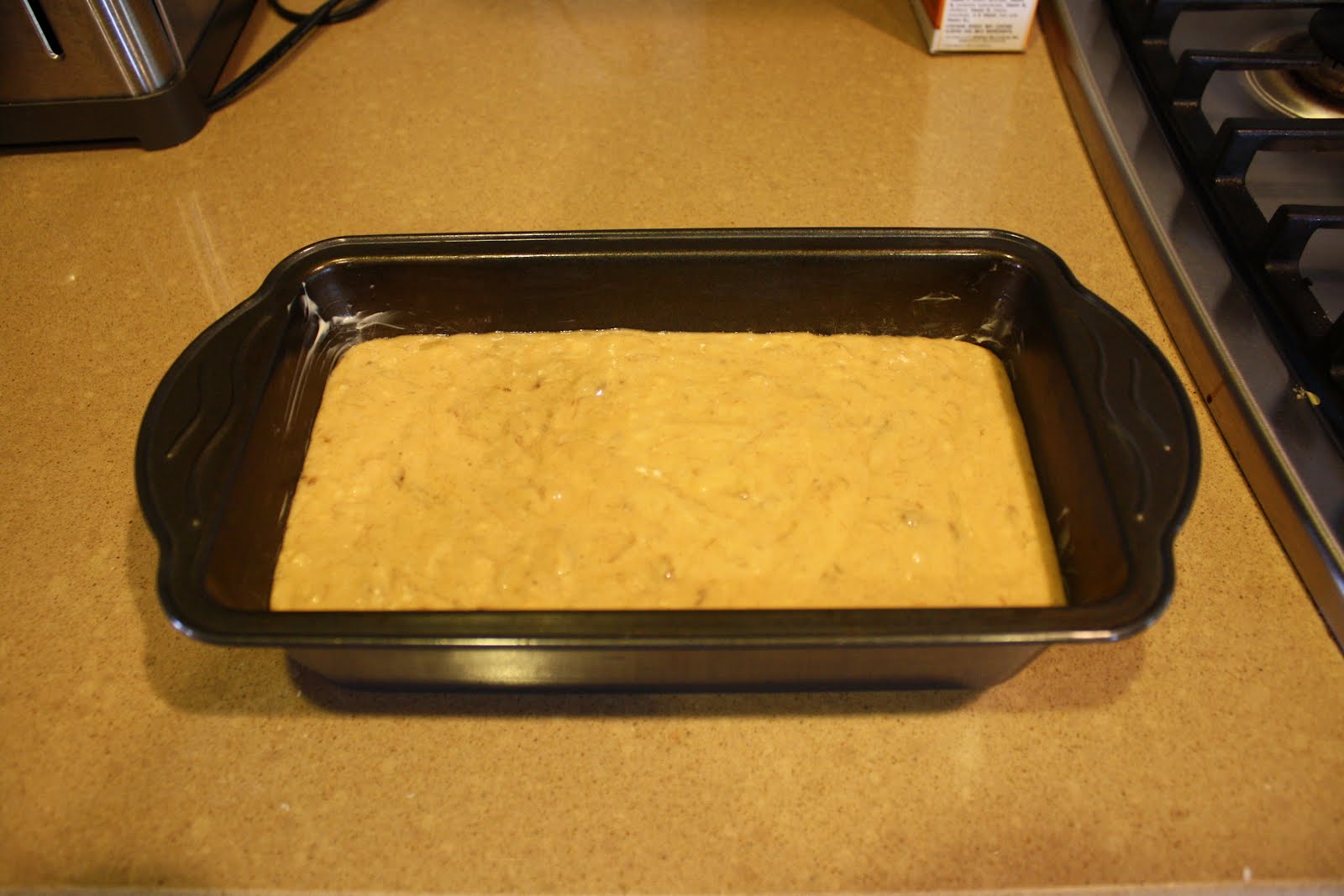
When I saw this recipe on Bakerella, I knew I had to try it! Since I don’t have lactose-free cream cheese, I used plain Greek yogurt instead and baked the cupcakes a bit longer, and it worked wonderfully. This recipe makes 18 cupcakes, though, so I froze half of them for later. The downside is that the paper liners were very hard to peel off, though more so in the case of the metal muffin pan than in the MicroWare one, and more so on the edges that were slightly more brown. I’m thinking it was because of the heat and I wonder if you could get better results by greasing the muffin tins instead of using paper liners. Note that the cupcakes are somewhat dense, and perhaps more like sweet muffins than true cupcakes. In any case, these were delicious!
For the yogurt mixture
8 oz. plain Greek yogurt (lactose-free)
½ cup sugar
1 small banana, puréed (mashed is fine)
1 egg
1 tsp. vanilla
8 oz. semisweet chocolate chips
For the chocolate mixture
1 ½ cups all-purpose flour
1/3 cup cocoa
1 cup sugar
1 tsp. baking soda
½ tsp. salt
2 large bananas, puréed (mashed is fine)
1/3 cup oil
1 tsp. vanilla
Preheat oven to 350 °F.
For the yogurt mixture
Beat yogurt and sugar together.
Add banana, egg and vanilla and mix together until combined.
Stir in chocolate chips and set aside.
For the chocolate mixture
Sift together flour, cocoa, sugar, soda and salt using a wire whisk.
Add bananas, oil and vanilla and mix together on low until combined.
Use a large scoop to fill cupcake liners with batter.
Repeat by topping the cupcake batter with the yogurt mixture.
Bake for about 30-35 minutes or until done.


For the yogurt mixture
8 oz. plain Greek yogurt (lactose-free)
½ cup sugar
1 small banana, puréed (mashed is fine)
1 egg
1 tsp. vanilla
8 oz. semisweet chocolate chips
For the chocolate mixture
1 ½ cups all-purpose flour
1/3 cup cocoa
1 cup sugar
1 tsp. baking soda
½ tsp. salt
2 large bananas, puréed (mashed is fine)
1/3 cup oil
1 tsp. vanilla
Preheat oven to 350 °F.
For the yogurt mixture
Beat yogurt and sugar together.
Add banana, egg and vanilla and mix together until combined.
Stir in chocolate chips and set aside.
For the chocolate mixture
Sift together flour, cocoa, sugar, soda and salt using a wire whisk.
Add bananas, oil and vanilla and mix together on low until combined.
Use a large scoop to fill cupcake liners with batter.
Repeat by topping the cupcake batter with the yogurt mixture.
Bake for about 30-35 minutes or until done.
Filet de porc farci au fromage de chèvre et aux noix
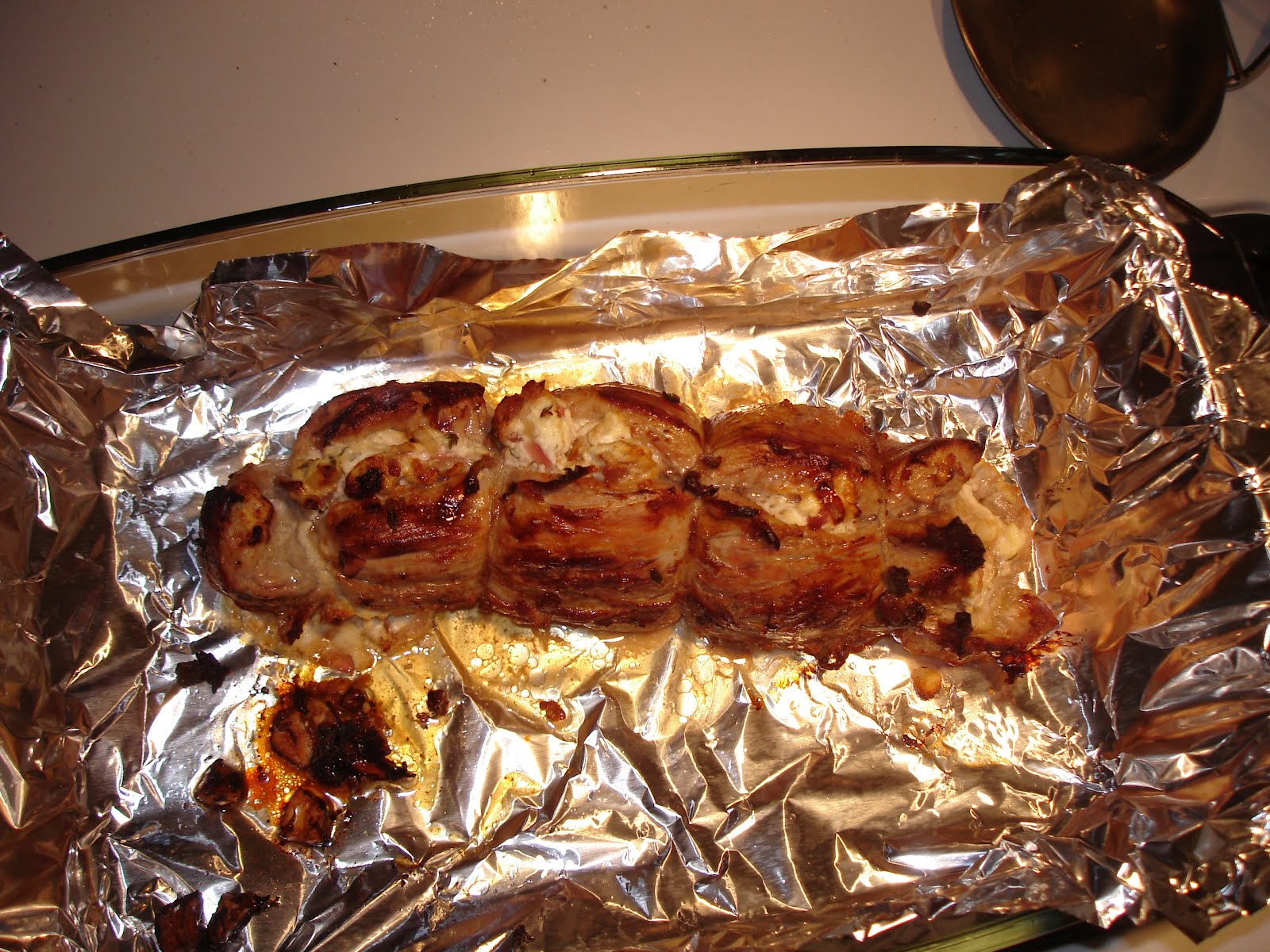
Cet été, je vais beaucoup cuisiner avec du fromage de chèvre. Je me gâte, puisque je n’ai accès au fromage de chèvre sans lactose qu’au Québec! J’ai donc fait une recette de Coup de Pouce, un filet de porc farci. J’ai vraiment adoré, et l’Ingénieur aussi a bien aimé. Je n’ai pas aplati le proc aussi minutieusement qu’il l’aurait fallu, mais ce n’était pas très grave (pour bien faire, regarder cette vidéo). J’ai servi cela avec une salade de maïs et de tomates.
2 c. à soupe d’huile d’olive
2 échalotes, hachées finement
1 filet de porc, le gras enlevé (environ 1 lb)
1 paquet (125 g) de fromage de chèvre sans lactose Elite de Damafro
¼ tasse de noix hachées (pacanes, noix de Grenoble ou noisettes)
3 c. à thé de thym frais, haché
sel et poivre noir du moulin
Préchauffer le four à 350 °F.
Dans un poêlon, chauffer 1 c. à soupe de l’huile à feu moyen. Ajouter les échalotes et cuire, en brassant, de 3 à 4 minutes ou jusqu’à ce qu’elles soient légèrement dorées. Réserver dans une assiette.
Couper le filet de porc sur la longueur jusqu’à environ ½ po du bord. Ouvrir le filet à la manière d’un livre et le placer entre deux épaisseurs de pellicule de plastique. À l’aide d’un maillet ou d’un poêlon en fonte, aplatir le filet uniformément jusqu’à environ ½ po d’épaisseur. Retirer la pellicule de plastique. Disposer les échalotes réservées, le fromage de chèvre, les noix et le thym au centre du filet, sur toute la longueur. En commençant par un côté long, rouler le filet de porc et l’attacher à l’aide de ficelle à rôti. Saler et poivrer.
Dans le poêlon, chauffer le reste de l’huile à feu moyen-vif. Cuire le filet de porc de 6 à 8 minutes en le faisant dorer de tous les côtés. Mettre le filet de porc dans un plat allant au four et cuire au four pendant environ 20 minutes ou jusqu’à ce qu’il soit encore légèrement rosé à l’intérieur. Mettre le filet de porc sur une planche à découper et le couvrir de papier d’aluminium, sans serrer. Laisser reposer pendant 5 minutes, puis couper le filet en tranches.


2 c. à soupe d’huile d’olive
2 échalotes, hachées finement
1 filet de porc, le gras enlevé (environ 1 lb)
1 paquet (125 g) de fromage de chèvre sans lactose Elite de Damafro
¼ tasse de noix hachées (pacanes, noix de Grenoble ou noisettes)
3 c. à thé de thym frais, haché
sel et poivre noir du moulin
Préchauffer le four à 350 °F.
Dans un poêlon, chauffer 1 c. à soupe de l’huile à feu moyen. Ajouter les échalotes et cuire, en brassant, de 3 à 4 minutes ou jusqu’à ce qu’elles soient légèrement dorées. Réserver dans une assiette.
Couper le filet de porc sur la longueur jusqu’à environ ½ po du bord. Ouvrir le filet à la manière d’un livre et le placer entre deux épaisseurs de pellicule de plastique. À l’aide d’un maillet ou d’un poêlon en fonte, aplatir le filet uniformément jusqu’à environ ½ po d’épaisseur. Retirer la pellicule de plastique. Disposer les échalotes réservées, le fromage de chèvre, les noix et le thym au centre du filet, sur toute la longueur. En commençant par un côté long, rouler le filet de porc et l’attacher à l’aide de ficelle à rôti. Saler et poivrer.
Dans le poêlon, chauffer le reste de l’huile à feu moyen-vif. Cuire le filet de porc de 6 à 8 minutes en le faisant dorer de tous les côtés. Mettre le filet de porc dans un plat allant au four et cuire au four pendant environ 20 minutes ou jusqu’à ce qu’il soit encore légèrement rosé à l’intérieur. Mettre le filet de porc sur une planche à découper et le couvrir de papier d’aluminium, sans serrer. Laisser reposer pendant 5 minutes, puis couper le filet en tranches.
Monday, June 11, 2012
Quick Black Bean Soup
Hi everyone! Now that my URL has been updated, I feel like I can start posting recipes again. As was the case last year, my summer cooking will be somewhat simpler than during the rest of the year, because I’m deprived of a lot of the tools I normally use (no stand mixer, no food processor or immersion blender, no Bundt pan… I had to use the cheese grater as a citrus zester, too!). The first meal I made after we had unpacked was this black bean soup. It’s a recipe I got from my friend Jen, and it appealed to me because it was healthy as well as quick and easy to make. I wasn’t sure how it would turn out, because there are so few ingredients, but it was really good! I halved the recipe as written below, but note that it doesn’t really matter if you’re in Canada and have 19-oz cans of beans instead of 15-oz cans; just use your best approximation. I served it with some crackers and Damafro’s lactose-free garlic and herb goat cheese (which I can’t get in the States), but a good piece of bread would be nice, too. Enjoy!
1 Tbsp oil
1 cup chopped red onion
2 cloves garlic, minced
4 (15-oz) cans black beans, rinsed and drained
4 cups vegetable broth or stock
1 cup crushed tomatoes with rich purée
1 tsp ground cumin
1 tsp dried thyme
½ tsp chili powder (or to taste)
1 tsp salt
pepper to taste
parsley or cilantro, to garnish (optional)
Heat oil over medium heat. Add onion and garlic and onion and sauté until tender, about 5 minutes. Add remaining ingredients and bring to a boil. Reduce heat to medium-low and simmer, uncovered, for 20 minutes. Purée soup if desired (I couldn’t, but it was really good without puréeing).

1 Tbsp oil
1 cup chopped red onion
2 cloves garlic, minced
4 (15-oz) cans black beans, rinsed and drained
4 cups vegetable broth or stock
1 cup crushed tomatoes with rich purée
1 tsp ground cumin
1 tsp dried thyme
½ tsp chili powder (or to taste)
1 tsp salt
pepper to taste
parsley or cilantro, to garnish (optional)
Heat oil over medium heat. Add onion and garlic and onion and sauté until tender, about 5 minutes. Add remaining ingredients and bring to a boil. Reduce heat to medium-low and simmer, uncovered, for 20 minutes. Purée soup if desired (I couldn’t, but it was really good without puréeing).
Friday, June 08, 2012
Batch of links, and an update
I’ve been thinking about my online presence lately. I’ve decided it was high time to take the next step for this blog and give it its own URL. I had bought the domain name a while back, but never got around to using it, for various reasons. I finally hired Synapse Internet (founded by a friend of mine) to take care of things for me. You can now update your bookmarks to www.lactosefreegirl.com! I also changed the header by using a photo by Mei Teng found through stock.xchng, which I then cropped. Hopefully I’ll get around to working on my photography so that I can use my own pictures at some point.
I’ve also been giving some thought to my previous website(s). I haven’t updated it in almost three years! When I first started this blog, I explained that this format suits me a lot better than my bilingual website format. I’ve now decided to be honest with myself and admit that I will no longer be updating my old website, because I like blogging so much more. I will leave it online for at least a few years, but I can’t promise that it’ll be there indefinitely. Today’s batch of links will be things that I had up my sleeve for the next website update. Some of these links (and the CD reviews) are, in fact, three years old – sorry about the delay. I’ll get back to recipes very soon!
- Care2 is known for exposing topics on which we need to act and for organizing the effort to change things. It’s usually something like fighting animal cruelty, human trafficking or overfishing. But sometimes, they expose a group that is acting in an absurd way. It turns out that the coal industry is saying that CO2 is good for us, because reducing CO2 would… cost jobs? Um, what about jobs created by switching to greener technologies? And what about all the bad things that CO2, in excess, has been proven to do? I’m really glad that Care2 is exposing this, and you should go read the article to see what crap is being advertised to the American public. [This article is dated from 2009, but unfortunately the situation hasn’t improved much.]
- A great article about using the Passion Index to rate artists – that is, instead of only counting how many albums or songs an artist has sold, actually counting the number of times the songs were listened to (which we can now track with digital media).
- I wanted to share this link from the Sundance Channel, where Isabella Rossellini explains with a puppet show how different animal species reproduce. It’s not only educational, it’s quite fun and well presented. The Green Porno series even discusses what to do about species that are driven to extinction by humans (like calalmari and anchovies, due to overfishing). [There’s now a new series, Seduce Me, about how animals choose mates.]
- I had been hearing about real-life vigilante superheroes. I had always thought, after reading superhero comics, “Why can’t we have vigilantes like this in real life?” (Well, the ones without superpowers, at least.) It turns out we do! There are some in Cincinnati, in Milwaukee, in Massachusetts and even in Verona. I understand the dangers of one taking the law into one’s own hands, both for oneself and for the general public, but I still applaud the principle if it’s done correctly and in collaboration with law enforcement.
- This Is Us – The Backstreet Boys (2009)
What to say, what to say... Well, Straight Through My Heart is catchy, sure, I’ll give it that. But the album as a whole is quite monotonous. Nothing really stands out, and it just sounds like one big dance mix, without any actual musical instruments. PDA’s lyrics are a little immature for men in their thirties, as is courting the club scene. Then again, it’s not like they wrote most songs (they have just one to their name). As a matter of fact, so many people are involved in the making of this album that it was really nice for the band members themselves to even show up to record anything for this. Also, the Auto-Tune feature is totally overused, but the worst part is that they wouldn’t even need it, because they can actually sing (not that this is the greatest album to prove it).
All in all: This Is Us isn’t really them; I think it’s their label’s idea of what they should be right now. Let’s hope the next one is closer to Never Gone or Unbreakable. The Backstreet Boys are in fact talented vocalists, so I’d like to hear it on their album. [Update: I’ve since listened to Howie D’s 2011 album, Back To Me, and it’s the exact same thing. I’m hoping that Kevin Richardson’s return to the band will improve things.]
- Shout It Out – Hanson (2010)
Waiting for This (which has the title lyric) is catchy, and overall quite similar to the band’s previous work. Thinkin’ ‘Bout Somethin’, the first single, is the song that really has people talking: it was written in the style of a lot of Motown songs, cowbell and all. The video is worth seeing (MTV even named it one of their top 5 videos with killer dance sequences). I still marvel at how Hanson had to struggle, break barriers and become an indie rock band with their own label before they could… do synchronized dancing? A dance that was taught to fans filling in as extras, minutes before the shoot? It really fits with the Blue Brothers homage, though, and the song is really fun (and in Hanson tradition, if you pay attention to the lyrics, you’ll realize it’s a song about a bad breakup that’s been made into this super happy tune). The two songs that stand out to me, style-wise, are And I Waited as well as Give A Little (I would bet money this was composed on the Rock Boat IX cruise, because it reminds me of Under The Sea a little bit, which Hanson covered during that event) . Also, there’s no hidden track at the end, which is disappointing for a Hanson album. I love Kiss Me When You Come Home, and Carry You There for something slightly more mellow (though Use Me Up and Me Myself and I are really the sad ones). Overall, though, this album has too many horns. Some horns are nice, but I think that the band equates them with a certain creative freedom, since they started using them on their first indie album; here they often take over.
All in all: This album doesn’t stand out for me the way the two previous ones did and contains no surprises, but it’s a very good album nonetheless.
And on a more recent note…
- I saw Snow White and the Huntsman last weekend. Unlike Mirror, Mirror, it wasn’t a retelling so much as a reboot. It’s nice to see it told as an action movie with fabulous special effects (but as the Engineer rightly points out, we’ve come to expect those on the big screen by now). Charlize Theron does a fantastic acting job, though at times I found her performance over the top and more dramatic than a two-year-old’s tantrum. Chris Hemsworth is awesome, but his role doesn’t stray too far from Thor (which we already know he can do). As for Kristen Stewart, if she wants to prove that she can act, she should stop playing blank characters (Bella Swan is a good example of blank, and Snow White, at least in this movie, is as well).
I’ve also been giving some thought to my previous website(s). I haven’t updated it in almost three years! When I first started this blog, I explained that this format suits me a lot better than my bilingual website format. I’ve now decided to be honest with myself and admit that I will no longer be updating my old website, because I like blogging so much more. I will leave it online for at least a few years, but I can’t promise that it’ll be there indefinitely. Today’s batch of links will be things that I had up my sleeve for the next website update. Some of these links (and the CD reviews) are, in fact, three years old – sorry about the delay. I’ll get back to recipes very soon!
- Care2 is known for exposing topics on which we need to act and for organizing the effort to change things. It’s usually something like fighting animal cruelty, human trafficking or overfishing. But sometimes, they expose a group that is acting in an absurd way. It turns out that the coal industry is saying that CO2 is good for us, because reducing CO2 would… cost jobs? Um, what about jobs created by switching to greener technologies? And what about all the bad things that CO2, in excess, has been proven to do? I’m really glad that Care2 is exposing this, and you should go read the article to see what crap is being advertised to the American public. [This article is dated from 2009, but unfortunately the situation hasn’t improved much.]
- A great article about using the Passion Index to rate artists – that is, instead of only counting how many albums or songs an artist has sold, actually counting the number of times the songs were listened to (which we can now track with digital media).
- I wanted to share this link from the Sundance Channel, where Isabella Rossellini explains with a puppet show how different animal species reproduce. It’s not only educational, it’s quite fun and well presented. The Green Porno series even discusses what to do about species that are driven to extinction by humans (like calalmari and anchovies, due to overfishing). [There’s now a new series, Seduce Me, about how animals choose mates.]
- I had been hearing about real-life vigilante superheroes. I had always thought, after reading superhero comics, “Why can’t we have vigilantes like this in real life?” (Well, the ones without superpowers, at least.) It turns out we do! There are some in Cincinnati, in Milwaukee, in Massachusetts and even in Verona. I understand the dangers of one taking the law into one’s own hands, both for oneself and for the general public, but I still applaud the principle if it’s done correctly and in collaboration with law enforcement.
- This Is Us – The Backstreet Boys (2009)
What to say, what to say... Well, Straight Through My Heart is catchy, sure, I’ll give it that. But the album as a whole is quite monotonous. Nothing really stands out, and it just sounds like one big dance mix, without any actual musical instruments. PDA’s lyrics are a little immature for men in their thirties, as is courting the club scene. Then again, it’s not like they wrote most songs (they have just one to their name). As a matter of fact, so many people are involved in the making of this album that it was really nice for the band members themselves to even show up to record anything for this. Also, the Auto-Tune feature is totally overused, but the worst part is that they wouldn’t even need it, because they can actually sing (not that this is the greatest album to prove it).
All in all: This Is Us isn’t really them; I think it’s their label’s idea of what they should be right now. Let’s hope the next one is closer to Never Gone or Unbreakable. The Backstreet Boys are in fact talented vocalists, so I’d like to hear it on their album. [Update: I’ve since listened to Howie D’s 2011 album, Back To Me, and it’s the exact same thing. I’m hoping that Kevin Richardson’s return to the band will improve things.]
- Shout It Out – Hanson (2010)
Waiting for This (which has the title lyric) is catchy, and overall quite similar to the band’s previous work. Thinkin’ ‘Bout Somethin’, the first single, is the song that really has people talking: it was written in the style of a lot of Motown songs, cowbell and all. The video is worth seeing (MTV even named it one of their top 5 videos with killer dance sequences). I still marvel at how Hanson had to struggle, break barriers and become an indie rock band with their own label before they could… do synchronized dancing? A dance that was taught to fans filling in as extras, minutes before the shoot? It really fits with the Blue Brothers homage, though, and the song is really fun (and in Hanson tradition, if you pay attention to the lyrics, you’ll realize it’s a song about a bad breakup that’s been made into this super happy tune). The two songs that stand out to me, style-wise, are And I Waited as well as Give A Little (I would bet money this was composed on the Rock Boat IX cruise, because it reminds me of Under The Sea a little bit, which Hanson covered during that event) . Also, there’s no hidden track at the end, which is disappointing for a Hanson album. I love Kiss Me When You Come Home, and Carry You There for something slightly more mellow (though Use Me Up and Me Myself and I are really the sad ones). Overall, though, this album has too many horns. Some horns are nice, but I think that the band equates them with a certain creative freedom, since they started using them on their first indie album; here they often take over.
All in all: This album doesn’t stand out for me the way the two previous ones did and contains no surprises, but it’s a very good album nonetheless.
And on a more recent note…
- I saw Snow White and the Huntsman last weekend. Unlike Mirror, Mirror, it wasn’t a retelling so much as a reboot. It’s nice to see it told as an action movie with fabulous special effects (but as the Engineer rightly points out, we’ve come to expect those on the big screen by now). Charlize Theron does a fantastic acting job, though at times I found her performance over the top and more dramatic than a two-year-old’s tantrum. Chris Hemsworth is awesome, but his role doesn’t stray too far from Thor (which we already know he can do). As for Kristen Stewart, if she wants to prove that she can act, she should stop playing blank characters (Bella Swan is a good example of blank, and Snow White, at least in this movie, is as well).
Friday, June 01, 2012
Liens de la semaine
- Malheureusement, je n’ai pas eu le temps d’en faire une critique, mais j’ai mangé au Club Chasse et Pêche il y a une semaine, et c’était véritablement exquis! Entrée de bison, prune rouge, cromesquis, quinoa et pourpier, plat principal de magret de canard, couscous israélien, pois chiches crus et pistaches, plat de légumes (salade grecque, gratin de courge butternut, têtes de violon et purée d’aubergine), puis fruits exotiques et sorbet à la noix de coco (sans mousse de chocolat blanc, à cause du lactose). Si je gagne la loterie un jour, j’en fais un repas mensuel!
- Samedi dernier, c’était le mariage de Chère Sœur et de Cher Beau-Frère, un mariage magnifique comme il y en a trop peu, sans contredit l’un des plus beaux mariages auxquels j’ai assisté de ma vie. Les mariés étaient resplendissants, les discours étaient personnels et touchants, les photos sont fabuleuses, sans parler de la robe de la mariée! (J’ai mis ma robe couleur corail et laissé tomber les barrettes.) Mais bon, ce qui va vous intéresser sur mon blogue de bouffe, c’est la bouffe! On la doit à Avocado, dont l’excellent menu bien exécuté m’a conquise. Écoutez un peu ça : raviolis aux pois verts et échalotes, feta et lime kéfir, velouté de courge butternut au piment d’espelette, garam masala et poireaux frits; pétoncle poêlé, salade de betterave jaune, salicorne et coriandre (ici, j’avoue ne pas avoir aimé le pétoncle, car je n’aime pas les fruits de mer; l’Ingénieur et moi avons donc fait équipe alors qu’il s’occupait des pétoncles, et moi, des betteraves); et cuisse de canard confite aux cinq épices et caramel de soya servie avec pommes de terre douces et légumes du marché. Ce canard, je salive encore en y pensant! J’aimerais bien qu’Avocado fasse de petits plats à emporter, j’irais volontiers me gâter de temps à autre en reprenant la même chose. Vraiment exquis!
- J’ai tellement aimé le film Intouchables! Heureusement qu’il était encore au cinéma cette semaine à Montréal, parce qu’il ne passait pas à San Antonio. Le film met en vedette François Cluzet et Omar Sy; il est basé sur une histoire vraie. Un riche tétraplégique engage comme aide un immigrant venant de purger une peine de prison de 6 mois sans aucune formation particulière (entre autre parce qu’il n’éprouve de pitié pour personne, y compris les handicapés), et entre les deux hommes naît une amitié inattendue. Je ne veux pas trop en révéler, mais c’est vraiment à voir!
- Samedi dernier, c’était le mariage de Chère Sœur et de Cher Beau-Frère, un mariage magnifique comme il y en a trop peu, sans contredit l’un des plus beaux mariages auxquels j’ai assisté de ma vie. Les mariés étaient resplendissants, les discours étaient personnels et touchants, les photos sont fabuleuses, sans parler de la robe de la mariée! (J’ai mis ma robe couleur corail et laissé tomber les barrettes.) Mais bon, ce qui va vous intéresser sur mon blogue de bouffe, c’est la bouffe! On la doit à Avocado, dont l’excellent menu bien exécuté m’a conquise. Écoutez un peu ça : raviolis aux pois verts et échalotes, feta et lime kéfir, velouté de courge butternut au piment d’espelette, garam masala et poireaux frits; pétoncle poêlé, salade de betterave jaune, salicorne et coriandre (ici, j’avoue ne pas avoir aimé le pétoncle, car je n’aime pas les fruits de mer; l’Ingénieur et moi avons donc fait équipe alors qu’il s’occupait des pétoncles, et moi, des betteraves); et cuisse de canard confite aux cinq épices et caramel de soya servie avec pommes de terre douces et légumes du marché. Ce canard, je salive encore en y pensant! J’aimerais bien qu’Avocado fasse de petits plats à emporter, j’irais volontiers me gâter de temps à autre en reprenant la même chose. Vraiment exquis!
- J’ai tellement aimé le film Intouchables! Heureusement qu’il était encore au cinéma cette semaine à Montréal, parce qu’il ne passait pas à San Antonio. Le film met en vedette François Cluzet et Omar Sy; il est basé sur une histoire vraie. Un riche tétraplégique engage comme aide un immigrant venant de purger une peine de prison de 6 mois sans aucune formation particulière (entre autre parce qu’il n’éprouve de pitié pour personne, y compris les handicapés), et entre les deux hommes naît une amitié inattendue. Je ne veux pas trop en révéler, mais c’est vraiment à voir!
Tuesday, May 29, 2012
Laloux
Hier, l’Ingénieur et moi sommes allés souper chez Laloux avec mes parents. Cela faisait partie des restaurants que je voulais essayer, et je n’ai pas été déçue! Ce bistro français a un décor simple et chaleureux ainsi qu’un personnel à la fois sympathique, efficace et ultra-poli.
J’ai commencé avec une entrée de salade verte avec vinaigrette à l’échalote confite; la portion était extrêmement généreuse, avec diverses laitues empilées dans l’assiette et arrosées d’une délicieuse vinaigrette (dont je n’aurais toutefois pas pu identifier la saveur). L’Ingénieur a pris le maquereau mariné (tangerine de miel, carottes et vinaigrette au yuzu), tandis que mes parents ont tous les deux commandé la salade d’asperges (jambon fumé, crumble à la muscade et gruyère). Les poissons au menu sont obtenus de pêcheries durables et responsables parrainées par Ocean Wise, ce que je trouve fantastique!
Comme plat principal, j’ai choisi un filet de bœuf (en spécial du soir au même prix que le contre-filet) avec émulsion d’ail noir, fricassée de têtes de violons et de pommes de terre rattes avec sauce forestière au thé du Labrador. C’était absolument délicieux! J’en remangerais toute la semaine, si je le pouvais. L’Ingénieur s’est gâté avec un plat de saumon et de crevettes avec risotto (il adore le poisson et les fruits de mer, et comme vous le savez, j’en cuisine vraiment très peu!); mes parents ont tous les deux mangé les pétoncles avec gnocchis noirs et aïoli vert. Tout le monde était très satisfait.
Pour le dessert, nous avons tous pris le cake au pavot avec crème anglaise au citron, crumble de chocolat blanc, gel de citron Meyer et petites pousses de coriandre. Il y avait du lactose, oui, mais pas énormément. J’ai été un peu déçue par le gel de citron Meyer, qui était à peine visible étalé dans l’assiette, mais le tout était excellent (même avec la coriandre), et je pense que le gâteau aux graines de pavot était parmi les meilleurs que j’ai mangé de ma vie!
Nous avons tous aimé découvrir ce restaurant, que nous classons parmi les bonnes adresses de Montréal.
J’ai commencé avec une entrée de salade verte avec vinaigrette à l’échalote confite; la portion était extrêmement généreuse, avec diverses laitues empilées dans l’assiette et arrosées d’une délicieuse vinaigrette (dont je n’aurais toutefois pas pu identifier la saveur). L’Ingénieur a pris le maquereau mariné (tangerine de miel, carottes et vinaigrette au yuzu), tandis que mes parents ont tous les deux commandé la salade d’asperges (jambon fumé, crumble à la muscade et gruyère). Les poissons au menu sont obtenus de pêcheries durables et responsables parrainées par Ocean Wise, ce que je trouve fantastique!
Comme plat principal, j’ai choisi un filet de bœuf (en spécial du soir au même prix que le contre-filet) avec émulsion d’ail noir, fricassée de têtes de violons et de pommes de terre rattes avec sauce forestière au thé du Labrador. C’était absolument délicieux! J’en remangerais toute la semaine, si je le pouvais. L’Ingénieur s’est gâté avec un plat de saumon et de crevettes avec risotto (il adore le poisson et les fruits de mer, et comme vous le savez, j’en cuisine vraiment très peu!); mes parents ont tous les deux mangé les pétoncles avec gnocchis noirs et aïoli vert. Tout le monde était très satisfait.
Pour le dessert, nous avons tous pris le cake au pavot avec crème anglaise au citron, crumble de chocolat blanc, gel de citron Meyer et petites pousses de coriandre. Il y avait du lactose, oui, mais pas énormément. J’ai été un peu déçue par le gel de citron Meyer, qui était à peine visible étalé dans l’assiette, mais le tout était excellent (même avec la coriandre), et je pense que le gâteau aux graines de pavot était parmi les meilleurs que j’ai mangé de ma vie!
Nous avons tous aimé découvrir ce restaurant, que nous classons parmi les bonnes adresses de Montréal.
Friday, May 25, 2012
Batch of links
- A few ideas on how to get your bacon fix if you are vegetarian or vegan.
- As I feared: the so-called gluten-free pizza at Domino’s isn’t actually free of gluten, as Domino’s cannot provide an environment free of cross-contamination. I take issue with the use of the term “gluten-free” in this context, then, as do others (see here or here).
- And while I’m linking to Gluten-Free Girl (Shauna Ahern): it boggles my mind to read all the vehement comments in response to her posts on Epi-Log (the Epicurious blog), to which she recently started contributing. For example, she recently wrote one about how to cook gluten-free for guests, which I found to be helpful for anyone who has to feed someone with gluten intolerance (or sensitivity) and isn’t sure how to go about it. But go take a look at the comments on that post (which are presented in reverse chronological order): immediately, she is assaulted by people saying that they wouldn’t dream of imposing those kinds of restrictions on their hosts (“how dare she be such a demanding guest”, “she doesn’t represent the celiac community”), and other people criticizing her lack of medical knowledge, even though she never claimed to be writing from a medical perspective. I don’t understand what has ruffled people’s feathers here; all she does is remind us about cross-contamination, either from the ingredients themselves or from surfaces and utensils in the home, about not going overboard making elaborate gluten-free dishes when a simple (safe, inexpensive) meal will do, and about not hesitating to ask your guests for help or guidance. That’s all perfectly reasonable to me. Moreover, when I host dinner guests, it is extremely important to me not to make them sick! If I’m preparing food for someone with a nut allergy, I find it crucial to avoid serving nuts or anything that could have been cross-contaminated (and when in doubt, I either omit the ingredient or ask that person for his advice). The same applies if I’m feeding someone with gluten intolerance; it’s true that in this case, feeding them gluten would “only” make them sick for a few days, not kill them from anaphylactic shock, but I still don’t want it to happen. And as someone who is lactose-intolerant, when I go to dinner at the house of a close friend or relative (who is obviously aware of my condition), I don’t expect the whole meal to be lactose-free, but I do expect to be able to eat enough there safely to be satiated. Who are those people who would have guests over and not care about their safety? And who are those people with food restrictions who don’t care what they are fed? I just can’t understand that! It’s been like this on every one of her posts, and I am just flabbergasted as to why readers are so angry and hostile toward a columnist. Some go so far as to say that anyone with positive comments is either a personal friend of Mrs. Ahern or one of her “white knights” she’s had to call to her rescue, as if she were some kind of fraud. Some find her snobby, but I find her so very down-to-earth (I mean, just because she’s not telling you how to make a gluten-free bologna sandwich doesn’t mean she only eats fancy food; obviously you must know this if you read her posts, since you’re on a food blog in the first place). If you don’t care about what you feed people, then given the post’s title, it clearly wasn’t for you in the first place.
- When I went gluten-free, a Tumblr site that had me laughing out loud, about the problems faced by people avoiding gluten. It’s cathartic!
- Massachussetts could become the first state to ban food waste! Instead of throwing food away, businesses would have to dispose of it through programs that reuse it for composting or energy. Brilliant!
- I’m usually a very quiet person, and I certainly don’t yell at the television often. Prior to last week, the last time I remember yelling at the screen was while watching Paula Deen make something (some kind of chicken casserole drowned in dairy), and as she said “Now just sprinkle some fresh parmesan on there,” she poured out stuff from a green can (um, hello? stuff from a can has nothing to do with fresh parmesan!). But last Friday, May 19th, I was watching the morning news program from an Arkadelphia hotel room and heard that the Louisiana Senate has overturned a law adopted by the House that would have banned the use of hand-held cellphones while driving. That in itself is frustrating, but according to the newscasters, the reason given by the Senate is that there is no evidence that using a cellphone while driving is any MORE dangerous than, for example, reading a newspaper while driving. Wait, what?!? That’s right, the Louisiana Senate thinks it’s fine to read the morning paper while driving to work! GAAHHH!!! Start by outlawing reading newspapers and books while driving if that’s really the problem, then move on to cellphones, people!
- I haven’t mentioned it on here, but of course I’ve been trying to keep up with the student strike in Quebec and discussing it with friends on Facebook and with the Engineer. Here’s an article that does a pretty good job of summing up recent events. I won’t go into a diatribe to fully explain my position argument by argument, but suffice it to say that I think the students and their supporters make very valid points. Of course, I do not condone any actions that result in violence, intimidation or destruction of property, be it from students or police officers, but the actions of some cannot (or should not) detract from the overall issues at stake. While the government does have a point in that universities cannot continually operate in the red, I do not like its kneejerk reaction of hiking tuition fees, especially since it hasn’t worked all that well since 2007. And I think it took too long to offer to talk with student associations. There are other problems to deal with such as mismanagement of financial resources by the universities themselves as well as poor long-term prioritizing by the government. I also don’t believe that it’s fair to compare Quebec only to provinces and states within geographical proximity to say that tuition fees should be higher without also acknowledging that those states are in the developed country with the highest tuition fees in the world, the biggest student debt in the world, and very poor social mobility. How about comparing ourselves to countries where state investment in education pays off, like Denmark or Sweden? Anyway, all this to say that I hope the government and students can resume good faith negotiations soon and agree on a solution to solve the immediate problem, then go from there.
- As I feared: the so-called gluten-free pizza at Domino’s isn’t actually free of gluten, as Domino’s cannot provide an environment free of cross-contamination. I take issue with the use of the term “gluten-free” in this context, then, as do others (see here or here).
- And while I’m linking to Gluten-Free Girl (Shauna Ahern): it boggles my mind to read all the vehement comments in response to her posts on Epi-Log (the Epicurious blog), to which she recently started contributing. For example, she recently wrote one about how to cook gluten-free for guests, which I found to be helpful for anyone who has to feed someone with gluten intolerance (or sensitivity) and isn’t sure how to go about it. But go take a look at the comments on that post (which are presented in reverse chronological order): immediately, she is assaulted by people saying that they wouldn’t dream of imposing those kinds of restrictions on their hosts (“how dare she be such a demanding guest”, “she doesn’t represent the celiac community”), and other people criticizing her lack of medical knowledge, even though she never claimed to be writing from a medical perspective. I don’t understand what has ruffled people’s feathers here; all she does is remind us about cross-contamination, either from the ingredients themselves or from surfaces and utensils in the home, about not going overboard making elaborate gluten-free dishes when a simple (safe, inexpensive) meal will do, and about not hesitating to ask your guests for help or guidance. That’s all perfectly reasonable to me. Moreover, when I host dinner guests, it is extremely important to me not to make them sick! If I’m preparing food for someone with a nut allergy, I find it crucial to avoid serving nuts or anything that could have been cross-contaminated (and when in doubt, I either omit the ingredient or ask that person for his advice). The same applies if I’m feeding someone with gluten intolerance; it’s true that in this case, feeding them gluten would “only” make them sick for a few days, not kill them from anaphylactic shock, but I still don’t want it to happen. And as someone who is lactose-intolerant, when I go to dinner at the house of a close friend or relative (who is obviously aware of my condition), I don’t expect the whole meal to be lactose-free, but I do expect to be able to eat enough there safely to be satiated. Who are those people who would have guests over and not care about their safety? And who are those people with food restrictions who don’t care what they are fed? I just can’t understand that! It’s been like this on every one of her posts, and I am just flabbergasted as to why readers are so angry and hostile toward a columnist. Some go so far as to say that anyone with positive comments is either a personal friend of Mrs. Ahern or one of her “white knights” she’s had to call to her rescue, as if she were some kind of fraud. Some find her snobby, but I find her so very down-to-earth (I mean, just because she’s not telling you how to make a gluten-free bologna sandwich doesn’t mean she only eats fancy food; obviously you must know this if you read her posts, since you’re on a food blog in the first place). If you don’t care about what you feed people, then given the post’s title, it clearly wasn’t for you in the first place.
- When I went gluten-free, a Tumblr site that had me laughing out loud, about the problems faced by people avoiding gluten. It’s cathartic!
- Massachussetts could become the first state to ban food waste! Instead of throwing food away, businesses would have to dispose of it through programs that reuse it for composting or energy. Brilliant!
- I’m usually a very quiet person, and I certainly don’t yell at the television often. Prior to last week, the last time I remember yelling at the screen was while watching Paula Deen make something (some kind of chicken casserole drowned in dairy), and as she said “Now just sprinkle some fresh parmesan on there,” she poured out stuff from a green can (um, hello? stuff from a can has nothing to do with fresh parmesan!). But last Friday, May 19th, I was watching the morning news program from an Arkadelphia hotel room and heard that the Louisiana Senate has overturned a law adopted by the House that would have banned the use of hand-held cellphones while driving. That in itself is frustrating, but according to the newscasters, the reason given by the Senate is that there is no evidence that using a cellphone while driving is any MORE dangerous than, for example, reading a newspaper while driving. Wait, what?!? That’s right, the Louisiana Senate thinks it’s fine to read the morning paper while driving to work! GAAHHH!!! Start by outlawing reading newspapers and books while driving if that’s really the problem, then move on to cellphones, people!
- I haven’t mentioned it on here, but of course I’ve been trying to keep up with the student strike in Quebec and discussing it with friends on Facebook and with the Engineer. Here’s an article that does a pretty good job of summing up recent events. I won’t go into a diatribe to fully explain my position argument by argument, but suffice it to say that I think the students and their supporters make very valid points. Of course, I do not condone any actions that result in violence, intimidation or destruction of property, be it from students or police officers, but the actions of some cannot (or should not) detract from the overall issues at stake. While the government does have a point in that universities cannot continually operate in the red, I do not like its kneejerk reaction of hiking tuition fees, especially since it hasn’t worked all that well since 2007. And I think it took too long to offer to talk with student associations. There are other problems to deal with such as mismanagement of financial resources by the universities themselves as well as poor long-term prioritizing by the government. I also don’t believe that it’s fair to compare Quebec only to provinces and states within geographical proximity to say that tuition fees should be higher without also acknowledging that those states are in the developed country with the highest tuition fees in the world, the biggest student debt in the world, and very poor social mobility. How about comparing ourselves to countries where state investment in education pays off, like Denmark or Sweden? Anyway, all this to say that I hope the government and students can resume good faith negotiations soon and agree on a solution to solve the immediate problem, then go from there.
Wednesday, May 23, 2012
Manger sur le pouce
Si on continue à voyager comme ça chaque été, « Manger sur le pouce » va devenir une chronique bi-estivale! Ce coup-ci, l’Ingénieur et moi avons essayé d’autres chaînes de restauration rapide pendant le trajet.
Tout d’abord, nous nous sommes arrêtés chez Starbucks, car j’avais entendu dire qu’il y avait un nouveau menu fraîcheur avec des sandwichs et des salades. Mais une fois sur place, déception : aucune salade, et juste trois paninis, tous avec du fromage. Bon, les petits desserts format une-bouchée sont quand même super, mais ça n’aide pas pour le repas, surtout que nous ne buvons pas de café ni de thé.
Ensuite, Taco Bell, aussi pour le nouveau menu fraîcheur. Mes réactions sont mixtes. En fait, on y a mangé deux fois, de mémoire en Arkansas et en Indiana. La première fois, j’ai commandé le burrito au poulet (menu Fresco) : il m’a coûté $1.98 avec les taxes. C’était surtout un mélange de riz et d’assaisonnement, avec un peu de poulet et un morceau de tomate (on était bien loin de l’image de l’annonce!). C’était si peu comme portion que j’ai dû en commander un autre pour ne pas avoir l’estomac dans les talons. J’en ai conclu que ce n’était peut-être pas santé, mais ce n’était toutefois pas aussi gras que bien d’autres options, ça avait l’avantage de ne pas contenir de lactose et ce n’était pas mauvais du tout. (L’Ingénieur a trouvé son repas infect, mais il a commandé trois tacos qui n’étaient pas sur le menu Fresco.) La deuxième fois, j’ai commandé tout de suite deux burritos au poulet. Et là, surprise : ils sont $2,79 chacun avec taxes, ils ne contiennent pas de riz mais sont plutôt remplis de purée de haricots noirs, de tomates et de laitue en plus du poulet et de l’assaisonnement. Avec un burrito et demi, j’en avais plus qu’assez (un seul aurait suffi), et c’était bien meilleur que le burrito avec riz. Somme toute, une bonne option sur la route – mais comment savoir ce qu’on va manger à telle ou telle succursale? Dans ma tête, ça reste donc une option, mais une option non fiable.
Une fois au Canada, je trouve qu’il y a des choix relativement santé (ou du moins, pas horribles) chez Tim Horton. Cependant, je trouve dommage qu’ils aient arrêté de mettre des tomates dans leur club sandwich au poulet rôti (qui n’a d’ailleurs plus grand-chose d’un club).
Enfin, on a innové un peu en apportant des sandwichs aux œufs et du fromage pour faire un pique-nique la première journée. C’était selon ce qui nous restait dans le frigo avant de partir, et sans glacière ni certitude d’avoir un frigo à l’hôtel, on ne peut pas emporter davantage qu’un repas. Cependant, c’était un repas très agréable! Je vais essayer de planifier mes menus avant les départs de façon à avoir de quoi faire un pique-nique, maintenant, ça vaut la peine.
Tout d’abord, nous nous sommes arrêtés chez Starbucks, car j’avais entendu dire qu’il y avait un nouveau menu fraîcheur avec des sandwichs et des salades. Mais une fois sur place, déception : aucune salade, et juste trois paninis, tous avec du fromage. Bon, les petits desserts format une-bouchée sont quand même super, mais ça n’aide pas pour le repas, surtout que nous ne buvons pas de café ni de thé.
Ensuite, Taco Bell, aussi pour le nouveau menu fraîcheur. Mes réactions sont mixtes. En fait, on y a mangé deux fois, de mémoire en Arkansas et en Indiana. La première fois, j’ai commandé le burrito au poulet (menu Fresco) : il m’a coûté $1.98 avec les taxes. C’était surtout un mélange de riz et d’assaisonnement, avec un peu de poulet et un morceau de tomate (on était bien loin de l’image de l’annonce!). C’était si peu comme portion que j’ai dû en commander un autre pour ne pas avoir l’estomac dans les talons. J’en ai conclu que ce n’était peut-être pas santé, mais ce n’était toutefois pas aussi gras que bien d’autres options, ça avait l’avantage de ne pas contenir de lactose et ce n’était pas mauvais du tout. (L’Ingénieur a trouvé son repas infect, mais il a commandé trois tacos qui n’étaient pas sur le menu Fresco.) La deuxième fois, j’ai commandé tout de suite deux burritos au poulet. Et là, surprise : ils sont $2,79 chacun avec taxes, ils ne contiennent pas de riz mais sont plutôt remplis de purée de haricots noirs, de tomates et de laitue en plus du poulet et de l’assaisonnement. Avec un burrito et demi, j’en avais plus qu’assez (un seul aurait suffi), et c’était bien meilleur que le burrito avec riz. Somme toute, une bonne option sur la route – mais comment savoir ce qu’on va manger à telle ou telle succursale? Dans ma tête, ça reste donc une option, mais une option non fiable.
Une fois au Canada, je trouve qu’il y a des choix relativement santé (ou du moins, pas horribles) chez Tim Horton. Cependant, je trouve dommage qu’ils aient arrêté de mettre des tomates dans leur club sandwich au poulet rôti (qui n’a d’ailleurs plus grand-chose d’un club).
Enfin, on a innové un peu en apportant des sandwichs aux œufs et du fromage pour faire un pique-nique la première journée. C’était selon ce qui nous restait dans le frigo avant de partir, et sans glacière ni certitude d’avoir un frigo à l’hôtel, on ne peut pas emporter davantage qu’un repas. Cependant, c’était un repas très agréable! Je vais essayer de planifier mes menus avant les départs de façon à avoir de quoi faire un pique-nique, maintenant, ça vaut la peine.
Wednesday, May 16, 2012
LA soupe au poulet
Une dernière recette avant que je prenne la route pour le Québec… On prend un trajet qu’on connaît déjà cette année, car il s’agit du même qu’on avait choisi l’année passée (avec escale à Whitmore Lake, petite ville pittoresque au Michigan, où on peut très bien manger au Captain Joe’s Grill - il y a de bonnes chances que je commande de nouveau les mêmes plats!). Notre printemps à San Antonio s’est bien déroulé, et nous avons gardé notre habitude des sorties mensuelles : randonnée à Stone Oak Park en janvier, rodéo en février, spectacle de comédie de Bill Maher au théâtre historique Majestic en mars (plus de la visite), et visite éclair à un carnaval de la Fiesta en avril. J’avoue avoir été déçue par ce dernier, mais il faut comprendre que la Fiesta, bien qu’ayant des origines historiques importantes, est aujourd’hui un amalgame d’événements officiels mais très disparates (et je dirais même : pas rapport). Il faut bien choisir ses sorties, je crois; le carnaval où nous sommes allés aurait pu être n’importe quelle fête foraine.
Après ce billet-ci, il va y avoir un petit silence, le temps qu’on voyage et qu’on se remette à cuisiner. Je pense ne pas apporter mon appareil photo avec objectif macro, car il prend beaucoup d’espace, et mes recettes estivales sont toujours moins soignées que le reste de l’année de toute façon.
Revenons-en à nos moutons! J’ai fait une des soupes de poulet du livre À la di Stasio 3, et c’était probablement la meilleure soupe au poulet que j’ai faite! J’ai utilisé une base de bouillon de poulet biologique de marque Better Than Bouillon (la seule marque que j’achète, maintenant), et sinon, j’ai suivi la recette. L’utilisation du gingembre et du curcuma était géniale! Le rendement est entre 4 et 6 portions.
2 c. à soupe d’huile d’olive
2 tasses de poireaux (partie blanche et vert pâle) en tranches fines (ou 1 oignon en dés)
2/3 tasse de céleri en dés
6 tasses de bouillon de poulet
¼ c. à thé de curcuma
1 morceau de 2" de gingembre râpé (ou 3 feuilles de lime kéfir)
1 poitrine de poulet cru (ou un reste de poulet cuit), en morceaux
1 tasse de quinoa cuit
3 tasses de jeunes épinards
4 oignons verts hachés finement
quartiers de lime (facultatif)
sel et poivre, au goût
Dans une casserole, chauffer l’huile, faire revenir le poireau et le céleri 10 minutes. Saler à mi-cuisson.
Ajouter le bouillon, le curcuma, le gingembre, le poulet s’il n’est pas cuit et laisser mijoter jusqu’à ce que les légumes et la viande soient cuits, de 15 à 20 minutes. Vérifier l’assaisonnement.
Au service, ajouter le quinoa et le poulet s’il était déjà cuit, les épinards et l’oignon vert. Réchauffer quelques minutes. Accompagner de quartiers de lime si désiré.
Après ce billet-ci, il va y avoir un petit silence, le temps qu’on voyage et qu’on se remette à cuisiner. Je pense ne pas apporter mon appareil photo avec objectif macro, car il prend beaucoup d’espace, et mes recettes estivales sont toujours moins soignées que le reste de l’année de toute façon.
Revenons-en à nos moutons! J’ai fait une des soupes de poulet du livre À la di Stasio 3, et c’était probablement la meilleure soupe au poulet que j’ai faite! J’ai utilisé une base de bouillon de poulet biologique de marque Better Than Bouillon (la seule marque que j’achète, maintenant), et sinon, j’ai suivi la recette. L’utilisation du gingembre et du curcuma était géniale! Le rendement est entre 4 et 6 portions.
2 c. à soupe d’huile d’olive
2 tasses de poireaux (partie blanche et vert pâle) en tranches fines (ou 1 oignon en dés)
2/3 tasse de céleri en dés
6 tasses de bouillon de poulet
¼ c. à thé de curcuma
1 morceau de 2" de gingembre râpé (ou 3 feuilles de lime kéfir)
1 poitrine de poulet cru (ou un reste de poulet cuit), en morceaux
1 tasse de quinoa cuit
3 tasses de jeunes épinards
4 oignons verts hachés finement
quartiers de lime (facultatif)
sel et poivre, au goût
Dans une casserole, chauffer l’huile, faire revenir le poireau et le céleri 10 minutes. Saler à mi-cuisson.
Ajouter le bouillon, le curcuma, le gingembre, le poulet s’il n’est pas cuit et laisser mijoter jusqu’à ce que les légumes et la viande soient cuits, de 15 à 20 minutes. Vérifier l’assaisonnement.
Au service, ajouter le quinoa et le poulet s’il était déjà cuit, les épinards et l’oignon vert. Réchauffer quelques minutes. Accompagner de quartiers de lime si désiré.
Tuesday, May 15, 2012
White Bean Ragoût with Toast
Right off the bat, I changed this recipe from Bon Appétit, because the first thing it wanted you to do was make something like 3 cups of soffritto, then use ½ cup and freeze the rest for another use. Um… no! I’m trying to empty the freezer right now, and with the way I cook, I just know I’m not going to get around to using the rest of it anytime soon. So we reduced the amount of soffrito and used all of it in the recipe, with great results. We also used less broth and cooked the whole thing less; that’s the version I’m giving you here. It was a simple, homely meal that was surprisingly good and satisfying. I think the soffritto and garlic gave it a lot of flavor! It’s also got some nice umami going on with the parmesan and tomato purée. The Engineer and I both enjoyed it very much.
1 medium onion, chopped
½ red bell pepper, chopped
3 Tbsp extra-virgin olive oil, plus more
kosher salt, freshly ground pepper
2 garlic cloves: 1 finely grated, 1 halved
1 tsp tomato paste
4 to 6 1-inch-thick slices ciabatta
8–10 Tbsp finely grated parmesan, divided
2 15-oz cans cannellini (white kidney) beans, rinsed and drained
2 cups vegetable broth, divided
1 cup cherry tomatoes, halved
2 Tbsp chopped flat-leaf parsley (optional)
Pulse onion in a food processor until finely chopped but not puréed. Transfer to a medium bowl. Pulse bell pepper in processor until finely chopped but not puréed; add to bowl and mix well.
Heat oil in a large heavy skillet over medium heat. Add onion mixture (it may splatter) and season with salt and pepper. Simmer, stirring often, until vegetables are completely softened, about 15 minutes. Add finely grated garlic and tomato paste and cook, stirring often, until tomato paste begins to turn deep red, about 3 minutes.
Meanwhile, preheat oven to 375 °F. Rub bread slices with cut sides of remaining garlic clove. Place bread on a baking sheet and sprinkle 1 Tbsp parmesan over each slice. Toast until cheese begins to brown, about 5 minutes. Set aside.
Heat soffritto and beans in same skillet over medium-high heat. Cook, stirring often, until heated through, about 1 minute. Stir in 1 cup broth; bring to a boil. Simmer, scraping up browned bits, until liquid is slightly thickened, 3–4 minutes. Add tomatoes and remaining 1 cup broth; simmer until tomatoes are tender, 3–4 minutes. Stir in 2 Tbsp parmesan. Season with salt and pepper.
Divide bread among bowls. Top with some bean mixture and broth. Garnish with remaining 2 Tbsp parmesan and parsley. Drizzle with oil, if desired.
Monday, May 14, 2012
Coral obsession
Pinterest serves many wonderful and indispensable purposes in my life, one of which is to highlight particular obsessions I might have. I started my account around the time that Dear Sister told me her wedding color was coral. Obviously, I was aware of the color before, and as a matter of fact, liked it very much. But ever since she told me, I’ve been pinning coral dress after coral dress (even though I hardly wear dresses, which itself has more to do with shoes than anything). My boards have a knitting pattern for a coral cardigan, coral shoes that did not fit me and a tutorial for coral barrettes. Coral pyjamas, a coral jacket and coral throw pillows. Even coral furniture, coral flowers and coral accessories. So I gave in to the coral obsession and bought some coral fabric to make a dress, finally.
The pattern I used was Simplicity 2362, view E (which is meant as either a day or an evening dress, and really wasn’t too hard to make). Let me say it loud and clear: Thank God for muslins! I actually took the time to make a muslin with my dress pattern, and it was a life saver. It allowed me to make mistakes on a practice dress and also showed me how to alter the pattern to get something that fit me well. I lengthened the hem, added more elastic under the arms, and did away with the interlining altogether. I also shortened the width of the back and added a pleat on each side of the back of the skirt to compensate. And I made straps instead of a halter top. I’m still not quite happy with the zipper, though this time part of that has to do with the fact that I preferred an invisible zipper to a regular one, and I had to make do with something that’s not quite the right shade. That being said, this dress fits me quite well. I love the empire waist and the fact that it has pockets!
According to the pattern, I should have needed 2 ½ yards of fabric (including lining), but the 2 yards of dark coral linen I had bought from Mood Fabrics were enough. I paid $10.15 for the pattern, plus $27.99 for the fabric (including taxes and shipping). I already had the thread, the elastic, and the hook-and-eye closure and paid $2.99 for the zipper. Factor in maybe $5.00 for 2 yards of muslin, and that brings the grand total to just over $46.00. Not bad! As of now, my plan is to wear it to my sister’s wedding, since I’m not quite happy with the result of my dress alteration (orange dress) and haven’t found a shrug, despite lots of searching. I’m really happy with how this dress turned out, though, and I’m considering making another one in black.
The pattern I used was Simplicity 2362, view E (which is meant as either a day or an evening dress, and really wasn’t too hard to make). Let me say it loud and clear: Thank God for muslins! I actually took the time to make a muslin with my dress pattern, and it was a life saver. It allowed me to make mistakes on a practice dress and also showed me how to alter the pattern to get something that fit me well. I lengthened the hem, added more elastic under the arms, and did away with the interlining altogether. I also shortened the width of the back and added a pleat on each side of the back of the skirt to compensate. And I made straps instead of a halter top. I’m still not quite happy with the zipper, though this time part of that has to do with the fact that I preferred an invisible zipper to a regular one, and I had to make do with something that’s not quite the right shade. That being said, this dress fits me quite well. I love the empire waist and the fact that it has pockets!
According to the pattern, I should have needed 2 ½ yards of fabric (including lining), but the 2 yards of dark coral linen I had bought from Mood Fabrics were enough. I paid $10.15 for the pattern, plus $27.99 for the fabric (including taxes and shipping). I already had the thread, the elastic, and the hook-and-eye closure and paid $2.99 for the zipper. Factor in maybe $5.00 for 2 yards of muslin, and that brings the grand total to just over $46.00. Not bad! As of now, my plan is to wear it to my sister’s wedding, since I’m not quite happy with the result of my dress alteration (orange dress) and haven’t found a shrug, despite lots of searching. I’m really happy with how this dress turned out, though, and I’m considering making another one in black.
Sweet Potato Patties
I won’t call these sweet potato burgers, because the patties fall apart, and to me, that’s not a good burger – or at least, not convenient. That being said, these patties are delicious! I had two recipes that were very similar, the first from Healthy Happy Life, and the other adapted from it at Love & Lemons. I used mainly the first one, though it’s interesting to note that where it used white beans, the other recipe used tofu, so that’s a variation to keep in mind. The seasonings are also quite adaptable; both recipes take things in different directions, and I chose yet another by adding cumin and garlic powder to the mix. I’ll write out the options below. Note that I ran out of panko crumbs after the first batch, so I made the second batch with matzo meal (which, interestingly, wasn’t even kosher for Passover). I really liked the result, though I had a slight preference for panko over matzo meal. The Engineer had his burger-style, while I had mine without bread (the green sauce in the picture is my tamarind-cashew crack sauce, but regular condiments will do).
2 cans cannellini white beans, drained and rinsed (OR 4.5 to 5 oz extra-firm tofu, crumbled)
1 large sweet potato, baked/peeled/mashed (about 2 cups)
2 Tbsp tahini
2 tsp maple syrup or agave nectar
¼ cup wheat flour
salt and pepper, to taste
optional: seasonings (whatever you have on hand: for example, 1 tsp lemon pepper seasoning or Cajun seasoning; 1 tsp cayenne pepper, 1 tsp minced rosemary, 1 minced clove of garlic; my variation was 1 tsp paprika, 1 tsp Korean pepper, 1 Tbsp nutritional yeast, ½ tsp cumin and ¼ tsp garlic powder)
½ cup panko crumbs (or matzo meal or regular breadcrumbs, in a pinch)
safflower oil for pan
toppings: avocado, tomato, Dijon mustard, whole grain buns, romaine, onion, sprouts
Place mashed sweet potato in a bowl and add the white beans (or tofu) and mash together.
Mash in tahini, syrup, flour and any additional seasoning. Your mixture will be quite soft and moist, but you should be able to form a patty. (I found that the patties were hard to shape and fell apart very easily, but both recipes said that was to be expected. Add more flour or a scoop of breadcrumbs to thicken the mixture if needed.)
Heat 1 Tbsp safflower oil in a pan over high heat. Form a patty from mixture and coat in panko crumbs. Then drop the patty in the pan. Repeat until the pan is filled. Cook until browned on both sides. (You could also bake at 425 °F for 15-20 minutes, until the edges are browned and crisp. If baking, use less panko.)
Serve on toasted bun or open-faced (I think that’s the way to go), with lots of toppings. Or serve without a bun, with a mixed greens salad.
Vegetarian Jambalaya
Jambalayas always intimidate me a little, because I don’t like seafood and because I don’t like spicy foods. But of course, if I make my own jambalaya, I can avoid those two problems! I had two recipes I wanted to try, and I made the vegetarian one first. It’s originally a vegan recipe I found on The Kind Life, but I used some vegetarian bacon and vegetarian chick’n that aren’t vegan. I also changed the spices a bit to make sure it was mild, though I served it with sriracha sauce on the side for the Engineer, who preferred his that way. The dish wasn’t hard to prepare, and we had a lot of leftovers (which I think would freeze well).
1 onion
2 or 3 cloves of garlic
1 red chili pepper (optional, I didn’t use it)
1 tsp chili flakes (I used Korean pepper, which is much milder)
4 slices vegan or vegetarian bacon or vegan chorizo
1 Tbsp smoked paprika (I used half that amount)
1 red bell pepper
1 cup short grain brown rice
1 tsp tomato/vegetable purée
1 ½ cups chopped tomatoes (fresh or canned)
salt and pepper, to taste
1/2 tsp blackstrap molasses
1 cup vegan or vegetarian chicken-style pieces
1 cup frozen peas
1 cup sweet corn (canned, fresh or frozen)
tabasco or sriracha sauce (as much or as little as you like)
large handful of freshly chopped flat leaf parsley
Heat a little vegetable oil in a pan. Finely dice the onion and add to the pan along with some seasoning. Allow to soften for a few minutes. Mince the garlic and finely chop the chili (if using) and add to pan along with the chili flakes.
Cut the “bacon” into chunks and add to pan along with the paprika and cook until it starts to color.
Cut the pepper into large pieces, add to pan, season and allow to soften with the other ingredients.
Pour in the brown rice, give it a stir and then add the tomato purée and chopped tomatoes. Season, add the molasses and one cup of water. Shake in a good amount of tabasco sauce (I didn’t use it here). Fill the cup with water and set aside – you will use this water throughout.
Allow to gently simmer for 30 min before adding the frozen chicken-style pieces – if using refrigerated pieces instead of frozen, they will take less time to cook. If it becomes too dry, add more water, like you would do for a risotto. Cook for a further 15 minutes or until the rice is fully cooked.
A few minutes before serving, add the peas and sweet corn and allow them to gently cook before sprinkling in the parsley ensuring to reserve some for when you plate up. Season and/or add more tabasco if necessary.
Serve in bowls and sprinkle with parsley.
1 onion
2 or 3 cloves of garlic
1 red chili pepper (optional, I didn’t use it)
1 tsp chili flakes (I used Korean pepper, which is much milder)
4 slices vegan or vegetarian bacon or vegan chorizo
1 Tbsp smoked paprika (I used half that amount)
1 red bell pepper
1 cup short grain brown rice
1 tsp tomato/vegetable purée
1 ½ cups chopped tomatoes (fresh or canned)
salt and pepper, to taste
1/2 tsp blackstrap molasses
1 cup vegan or vegetarian chicken-style pieces
1 cup frozen peas
1 cup sweet corn (canned, fresh or frozen)
tabasco or sriracha sauce (as much or as little as you like)
large handful of freshly chopped flat leaf parsley
Heat a little vegetable oil in a pan. Finely dice the onion and add to the pan along with some seasoning. Allow to soften for a few minutes. Mince the garlic and finely chop the chili (if using) and add to pan along with the chili flakes.
Cut the “bacon” into chunks and add to pan along with the paprika and cook until it starts to color.
Cut the pepper into large pieces, add to pan, season and allow to soften with the other ingredients.
Pour in the brown rice, give it a stir and then add the tomato purée and chopped tomatoes. Season, add the molasses and one cup of water. Shake in a good amount of tabasco sauce (I didn’t use it here). Fill the cup with water and set aside – you will use this water throughout.
Allow to gently simmer for 30 min before adding the frozen chicken-style pieces – if using refrigerated pieces instead of frozen, they will take less time to cook. If it becomes too dry, add more water, like you would do for a risotto. Cook for a further 15 minutes or until the rice is fully cooked.
A few minutes before serving, add the peas and sweet corn and allow them to gently cook before sprinkling in the parsley ensuring to reserve some for when you plate up. Season and/or add more tabasco if necessary.
Serve in bowls and sprinkle with parsley.
Saturday, May 12, 2012
BabyCakes
I’m finally getting around to reviewing the first BabyCakes cookbook, which came out three years ago (for those who don’t know, BabyCakes is a vegan bakery in New York that’s gotten rave reviews; they’ve since opened bakeries in Los Angeles and Orlando as well). I was a little angry when the first printing came out, because the tagline on the cover page of the first edition said “Vegan, Gluten-Free and (Mostly) Sugar-Free from New York's Most Talked-About Bakery”. The problem? While all recipes in the book are wheat-free, a lot of them contain spelt – which is NOT gluten-free. The editor who wrote the tagline basically hadn’t taken the time to find out what he was talking about. (The author of the book does discuss ingredients and substitutions here, and she’s well aware that spelt contains gluten.) In the second printing, it has been corrected to “Vegan, (Mostly) Gluten-Free, and (Mostly) Sugar-Free Recipes from New York's Most Talked-About Bakery”. I still have an issue with the word “sugar”, because it is used here as a synonym for “refined white sugar”, but there are tons of different sweeteners that still qualify as sugar without being the white refined stuff. A second cookbook has been published since then.
I was drawn to the idea of a vegan baking book because of my lactose-intolerance for the most part, and I also loved the idea of reducing sugar in my desserts. Because both the book and the shop were getting such rave reviews, including from non-vegans and from people who do eat wheat and, alright, because of the awesome trailer too (it’s too good not to share), I put the book on my wish list and got it for the holidays. I’ve made four recipes from it and I think I can talk about it in more general terms, now.
I started with the vanilla cupcakes, which happen to be gluten-free to boot. The recipe for both cupcake and frosting is on Epicurious. I made a half recipe, because I never want more than a dozen cupcakes in the house! My expectations were high, because this cupcake was once crowned the best cupcake of New York City (the best of ALL cupcakes, including non-vegan ones and wheat-based ones). However, my experience was quite different. I didn’t make cupcakes, I made little bricks! And the frosting never firmed up (which, according to BabyCakes' troubleshooting page online, tends to happen). They were so bad that I threw some away. ME, of all people, I threw away cupcakes – that speaks volumes. I’m not sure what happened. Perhaps I made a mistake when halving the recipe; perhaps the fact that the ingredients are written out in volumes instead of weight was a factor, as this is even more crucial when baking gluten-free; perhaps some of my ingredients weren’t fresh enough (this does happen with some gluten-free flours in my pantry). As for the frosting, I do know that it’s not the recipe used in the actual bakery; the one in the book was written to be more accessible to the home cook. So I’d love to try this recipe one more time if I ever get measurements in weight, but until then, I’m not touching it again.
After that, I made the red velvet cupcakes. I halved this recipe as well, but it turned out better. Then again, it calls for spelt flour, which gave them a consistency more like what I’m used to. They were a little dry, so I’d bake them a little less if I made them again. They were good, but not sweet at all, so they definitely need the frosting. I didn’t use the BabyCakes frosting this time, but one of my own (for a vegan frosting to pair with red velvet cake, you can try this fluffy buttercream one or that cream cheese one). The recipe for the cupcakes can be found here. As I said, they’re pretty good, but they’re certainly not dethroning my go-to utterly ridiculous red velvet cake.
The third recipe I tried was the banana bread, because it did look really good. I adapted the recipe a bit because I did not like that it called for a smaller-than-standard loaf pan AND had quantities planned in such a way that you DEFINITELY had batter left over. I put the whole thing in a regular loaf pan and baked it 10 minutes longer, and it turned out great. It could have gone wrong, because it can be hard to bake gluten-free goods in big pans, but seriously, it was nicely baked all the way through. At first, I wasn’t too sure about using Bob’s Red Mill all-purpose gluten-free flour, as the recipe calls for, because it contains chickpea flour and fava bean flour, neither one of which is the best choice for desserts, in my opinion. However, this isn’t really a dessert, more like a snack or breakfast item, and it worked well. That being said, Bob’s Red Mill all-purpose gluten-free flour is cross-contaminated by nuts; if you want to make this banana bread nut-free, try making your own all-purpose flour using a recipe such as this one or that one.
When I first tasted this banana bread, I thought it wasn’t sweet enough and decided I would definitely add chocolate chips next time. But when I had it again in the morning, it was perfect as it was! I like to cut myself a thick slice, toast it and spread a little margarine on it. This bread, despite being gluten-free, held together just fine in the toaster. It’s moist, delicious, and if I hadn’t made it myself, I’d have never known it was vegan or gluten-free. It’s also healthier than most banana bread recipes, so I really recommend it! It disappeared in two days. I’ve written down the recipe below, with my modifications (a version of the recipe is available on the BabyCakes website here, though it’s not quite the one printed in my cookbook; interestingly, there’s less batter total, but a higher ratio of sweetener and six times the vanilla).
Finally, I decided to make a half batch of the chocolate chips cookies, which is still about 2 dozen. The recipe said to use a melon baller to portion out the dough; that seemed very small to me, so I used my cookies scoop, which is bigger than a melon baller but smaller than an ice cream scoop. I realize now that I got 25 cookies by halving a recipe that the book claims makes 36 cookies in all, so clearly the author’s melon baller is even bigger than my cookie scoop! This recipe also calls for Bob’s Red Mill all-purpose gluten-free flour, and as it turns out, BabyCakes’ chocolate chip cookie recipe is the one printed on the package of flour! These cookies spread more than I thought they would and were perhaps over-baked by a minute or two, but they were still very good. And again, I certainly don't miss the gluten. They also gave me the opportunity to try a new-to-me product, Ricemellow Creme, which is essentially the vegan equivalent of marshmallow crème. It contains only four ingredients, but mostly brown rice syrup, so it’s much less processed than marshmallow crème and doesn’t contain refined sugar – though it is super sweet. It’s not pure white, more of a pale café-au-lait, because of its contents. I used it to make a version of this suggested by BabyCakes: cookie sandwiches, which I popped in the freezer for a while before eating. It felt very decadent! I wrote the recipe below; it is also available on Oprah.com.
So overall, there are things that I don’t like about this book, like imprecisions in quantities or amounts that are wrong for the size of pan specified (that being said, those things have been amended on the website, so I wonder if a third printing of the book would have the corrections as well). I feel like I shouldn’t have to tinker with a printed recipe to get it to work; I can tinker with it to suit personal preferences, but that’s another matter. Still, I think that this cookbook has a lot of potential. I might try a scone recipe next.
BabyCakes’ Banana Bread
2 cups Bob's Red Mill All Purpose Gluten Free Flour (I know it’s a volume, but it worked for me)
2 tsp baking soda
2 tsp baking powder
1 tsp xanthan gum
1 tsp salt
1 tsp cinnamon
½ cup coconut oil, plus more for pan
2/3 cup agave nectar
2/3 cup rice milk
1 tsp pure vanilla extract
1 ½ cups mashed bananas (I used 3 bananas)
1 cup vegan chocolate chips (optional)
Preheat oven to 325 °F. Brush your loaf pan with oil (or use vegan margarine) and set aside.
In a medium bowl, whisk together flour, baking powder, baking soda, xanthan gum, salt, and cinnamon. Add oil, agave nectar, rice milk and vanilla and then mix again. Fold in bananas (and chocolate chips, if using) until nicely distributed.
Pour batter into loaf pan and set in the oven. After 20 minutes, rotate the pan 180 degrees. Continue baking for about 25 minutes longer, or until a toothpick inserted in the center comes out clean.
Let banana bread stand in the pan for 20 minutes. Gently run a knife around the edge of the cake, cover the top of the pan with a cutting board and invert the loaf onto the board. Carefully lift the pan away and re-invert the bread. Covered with plastic wrap, it will keep at room temperature for 3 days.
BabyCakes’ Chocolate Chip Cookies
(Note that I halved this)
1 cup coconut oil
6 Tbsp homemade applesauce or store-bought unsweetened applesauce
1 tsp salt
2 Tbsp pure vanilla extract
1 ¼ cups evaporated cane juice (i.e., unrefined sugar, so I used my regular evaporated cane sugar)
2 cups Bob's Red Mill gluten-free all-purpose baking flour
¼ cup flax meal
1 tsp baking soda
1 ½ tsp xanthan gum
1 cup vegan chocolate chips
Preheat the oven to 325 °F. Line 2 baking sheets with parchment paper (I used silpats).
In a medium bowl, mix together the oil, applesauce, salt, vanilla and evaporated cane juice. In another medium bowl, whisk together the flour, flax meal, baking soda and xanthan gum. Using a rubber spatula, carefully add the dry ingredients to the wet mixture and stir until a grainy dough is formed. Gently fold in the chocolate chips just until they are evenly distributed throughout the dough.
Using a melon baller (or small cookie scoop; see above), scoop the dough onto the prepared baking sheets, spacing the portions 1 inch apart. Gently press each with the heel of your hand to help them spread (this was definitely not necessary in my kitchen). Bake the cookies on the center rack for 15 minutes (I would say a bit less), rotating the sheets 180 degrees after 9 minutes. The finished cookies will be crisp on the edges and soft in the center.
Let the cookies stand on the sheets for 10 minutes, then transfer them to a wire rack and cool completely before covering. Store the cookies in an airtight container at room temperature for up to 3 days.
Optional: Slather on an extremely generous dollop of your favorite frosting (or a marshmallow crème equivalent; see above) between two cookies; eat as is or freeze them first.
I was drawn to the idea of a vegan baking book because of my lactose-intolerance for the most part, and I also loved the idea of reducing sugar in my desserts. Because both the book and the shop were getting such rave reviews, including from non-vegans and from people who do eat wheat and, alright, because of the awesome trailer too (it’s too good not to share), I put the book on my wish list and got it for the holidays. I’ve made four recipes from it and I think I can talk about it in more general terms, now.
I started with the vanilla cupcakes, which happen to be gluten-free to boot. The recipe for both cupcake and frosting is on Epicurious. I made a half recipe, because I never want more than a dozen cupcakes in the house! My expectations were high, because this cupcake was once crowned the best cupcake of New York City (the best of ALL cupcakes, including non-vegan ones and wheat-based ones). However, my experience was quite different. I didn’t make cupcakes, I made little bricks! And the frosting never firmed up (which, according to BabyCakes' troubleshooting page online, tends to happen). They were so bad that I threw some away. ME, of all people, I threw away cupcakes – that speaks volumes. I’m not sure what happened. Perhaps I made a mistake when halving the recipe; perhaps the fact that the ingredients are written out in volumes instead of weight was a factor, as this is even more crucial when baking gluten-free; perhaps some of my ingredients weren’t fresh enough (this does happen with some gluten-free flours in my pantry). As for the frosting, I do know that it’s not the recipe used in the actual bakery; the one in the book was written to be more accessible to the home cook. So I’d love to try this recipe one more time if I ever get measurements in weight, but until then, I’m not touching it again.
After that, I made the red velvet cupcakes. I halved this recipe as well, but it turned out better. Then again, it calls for spelt flour, which gave them a consistency more like what I’m used to. They were a little dry, so I’d bake them a little less if I made them again. They were good, but not sweet at all, so they definitely need the frosting. I didn’t use the BabyCakes frosting this time, but one of my own (for a vegan frosting to pair with red velvet cake, you can try this fluffy buttercream one or that cream cheese one). The recipe for the cupcakes can be found here. As I said, they’re pretty good, but they’re certainly not dethroning my go-to utterly ridiculous red velvet cake.
The third recipe I tried was the banana bread, because it did look really good. I adapted the recipe a bit because I did not like that it called for a smaller-than-standard loaf pan AND had quantities planned in such a way that you DEFINITELY had batter left over. I put the whole thing in a regular loaf pan and baked it 10 minutes longer, and it turned out great. It could have gone wrong, because it can be hard to bake gluten-free goods in big pans, but seriously, it was nicely baked all the way through. At first, I wasn’t too sure about using Bob’s Red Mill all-purpose gluten-free flour, as the recipe calls for, because it contains chickpea flour and fava bean flour, neither one of which is the best choice for desserts, in my opinion. However, this isn’t really a dessert, more like a snack or breakfast item, and it worked well. That being said, Bob’s Red Mill all-purpose gluten-free flour is cross-contaminated by nuts; if you want to make this banana bread nut-free, try making your own all-purpose flour using a recipe such as this one or that one.
When I first tasted this banana bread, I thought it wasn’t sweet enough and decided I would definitely add chocolate chips next time. But when I had it again in the morning, it was perfect as it was! I like to cut myself a thick slice, toast it and spread a little margarine on it. This bread, despite being gluten-free, held together just fine in the toaster. It’s moist, delicious, and if I hadn’t made it myself, I’d have never known it was vegan or gluten-free. It’s also healthier than most banana bread recipes, so I really recommend it! It disappeared in two days. I’ve written down the recipe below, with my modifications (a version of the recipe is available on the BabyCakes website here, though it’s not quite the one printed in my cookbook; interestingly, there’s less batter total, but a higher ratio of sweetener and six times the vanilla).
Finally, I decided to make a half batch of the chocolate chips cookies, which is still about 2 dozen. The recipe said to use a melon baller to portion out the dough; that seemed very small to me, so I used my cookies scoop, which is bigger than a melon baller but smaller than an ice cream scoop. I realize now that I got 25 cookies by halving a recipe that the book claims makes 36 cookies in all, so clearly the author’s melon baller is even bigger than my cookie scoop! This recipe also calls for Bob’s Red Mill all-purpose gluten-free flour, and as it turns out, BabyCakes’ chocolate chip cookie recipe is the one printed on the package of flour! These cookies spread more than I thought they would and were perhaps over-baked by a minute or two, but they were still very good. And again, I certainly don't miss the gluten. They also gave me the opportunity to try a new-to-me product, Ricemellow Creme, which is essentially the vegan equivalent of marshmallow crème. It contains only four ingredients, but mostly brown rice syrup, so it’s much less processed than marshmallow crème and doesn’t contain refined sugar – though it is super sweet. It’s not pure white, more of a pale café-au-lait, because of its contents. I used it to make a version of this suggested by BabyCakes: cookie sandwiches, which I popped in the freezer for a while before eating. It felt very decadent! I wrote the recipe below; it is also available on Oprah.com.
So overall, there are things that I don’t like about this book, like imprecisions in quantities or amounts that are wrong for the size of pan specified (that being said, those things have been amended on the website, so I wonder if a third printing of the book would have the corrections as well). I feel like I shouldn’t have to tinker with a printed recipe to get it to work; I can tinker with it to suit personal preferences, but that’s another matter. Still, I think that this cookbook has a lot of potential. I might try a scone recipe next.
BabyCakes’ Banana Bread
2 cups Bob's Red Mill All Purpose Gluten Free Flour (I know it’s a volume, but it worked for me)
2 tsp baking soda
2 tsp baking powder
1 tsp xanthan gum
1 tsp salt
1 tsp cinnamon
½ cup coconut oil, plus more for pan
2/3 cup agave nectar
2/3 cup rice milk
1 tsp pure vanilla extract
1 ½ cups mashed bananas (I used 3 bananas)
1 cup vegan chocolate chips (optional)
Preheat oven to 325 °F. Brush your loaf pan with oil (or use vegan margarine) and set aside.
In a medium bowl, whisk together flour, baking powder, baking soda, xanthan gum, salt, and cinnamon. Add oil, agave nectar, rice milk and vanilla and then mix again. Fold in bananas (and chocolate chips, if using) until nicely distributed.
Pour batter into loaf pan and set in the oven. After 20 minutes, rotate the pan 180 degrees. Continue baking for about 25 minutes longer, or until a toothpick inserted in the center comes out clean.
Let banana bread stand in the pan for 20 minutes. Gently run a knife around the edge of the cake, cover the top of the pan with a cutting board and invert the loaf onto the board. Carefully lift the pan away and re-invert the bread. Covered with plastic wrap, it will keep at room temperature for 3 days.
BabyCakes’ Chocolate Chip Cookies
(Note that I halved this)
1 cup coconut oil
6 Tbsp homemade applesauce or store-bought unsweetened applesauce
1 tsp salt
2 Tbsp pure vanilla extract
1 ¼ cups evaporated cane juice (i.e., unrefined sugar, so I used my regular evaporated cane sugar)
2 cups Bob's Red Mill gluten-free all-purpose baking flour
¼ cup flax meal
1 tsp baking soda
1 ½ tsp xanthan gum
1 cup vegan chocolate chips
Preheat the oven to 325 °F. Line 2 baking sheets with parchment paper (I used silpats).
In a medium bowl, mix together the oil, applesauce, salt, vanilla and evaporated cane juice. In another medium bowl, whisk together the flour, flax meal, baking soda and xanthan gum. Using a rubber spatula, carefully add the dry ingredients to the wet mixture and stir until a grainy dough is formed. Gently fold in the chocolate chips just until they are evenly distributed throughout the dough.
Using a melon baller (or small cookie scoop; see above), scoop the dough onto the prepared baking sheets, spacing the portions 1 inch apart. Gently press each with the heel of your hand to help them spread (this was definitely not necessary in my kitchen). Bake the cookies on the center rack for 15 minutes (I would say a bit less), rotating the sheets 180 degrees after 9 minutes. The finished cookies will be crisp on the edges and soft in the center.
Let the cookies stand on the sheets for 10 minutes, then transfer them to a wire rack and cool completely before covering. Store the cookies in an airtight container at room temperature for up to 3 days.
Optional: Slather on an extremely generous dollop of your favorite frosting (or a marshmallow crème equivalent; see above) between two cookies; eat as is or freeze them first.
Subscribe to:
Posts (Atom)