Showing posts with label gardening/jardinage. Show all posts

Saturday, January 30, 2021

Rose Hip Syrup

As you know, I have rose bushes in my backyard. One of them in particular had produced a massive cluster of roses a while back (I honestly can’t remember which month it was, much of 2020 just blends together in my memory), so I had a massive cluster of rose hips in December. I decided to make something with them instead of letting them dry out on the branch and trimming them away when I got around to it. I read up on rose hips a bit on The Spruce and decided to make rose hip syrup, since I really didn’t have a lot of rose hips to work with. They were also much smaller than the ones referred to in most online recipes! 


I ended up adapting syrup recipes from The Spruce Eats and Susan Can Cook. I had about ¼ cup of trimmed rose hips, so I added ¼ cup of water in a saucepan and brought it to a simmer. However, the water evaporated too quickly, despite the lid on the saucepan, so I ended up mashing the rose hips a bit (they were too hard for me to cut them open and remove the innards) and adding another ¼ cup of water, boiling it a bit and then letting the whole thing steep. I strained the mixture and ended up with 6 tablespoons of rose hip water, so I added 3 tablespoons of sugar, boiled the mixture long enough for the sugar to dissolve, then kept the syrup in the fridge. 


I used it in drinks, mostly mixing it with ginger ale. I could definitely taste the syrup, and it was pleasant, but it’s very hard to describe that taste! Even when I tasted it on its own, the syrup didn’t have the taste I expected – to be fair, though, I’m thinking of the smell I associate with rose hips, and they may not necessarily taste quite like that. 

To be honest, I’m not sure that I’ll bother making it again, at least not with so few rose hips, but I’m glad I made something with them for once.

Thursday, June 04, 2020

Lemon Raspberry Scones

I had three Meyer lemons in my garden this year, and I used two of them to make these Meyer lemon and cranberry scones. Sadly, the dough was much too wet and they spread way too much, so even though they were good, I’m not keen on the recipe. To be honest, it felt a bit like I had wasted my Meyer lemons on this – I mean, look at that gorgeous zest!


Then I found these lemon and raspberry scones that had a higher flour-to-liquid ratio. The dough was still hard to with, but overall they were *much* better. The folding technique is really important here; I did it several times and love the layers that it created. I’m sure this would be delicious with Meyer lemons as well. That being said, the dough has no sugar whatsoever, so if you were to add cranberries instead of raspberries, I think you should add a few tablespoons of sugar. Then again, because there’s a glaze, this was fine with raspberries and no other sweetener, but just barely. The kids were happy, and the Engineer loved them and still called them “fluffy”, even though they were denser than the previous ones.

For the scones
4 cups all-purpose flour
4 tsp. baking powder
1 tsp. baking soda
1 tsp. cream of tartar
½ tsp. salt
1 ½ sticks cold lactose-free butter or margarine, cut into small slices
¾ cup lactose-free buttermilk (milk with a splash of lemon juice)
¾ lactose-free cream (or coconut milk)
1 large egg
1 Tbsp. lemon zest (from about 2 lemons)
12 oz. fresh raspberries or 1 ½ cups frozen berries

For the glaze
1 ½ cups powdered sugar, sifted
2 Tbsp. lemon juice
1 tsp. poppy seeds

For the scones
Preheat the oven to 425 °. Line a baking sheet with a silpat or parchment paper, or grease it.

Mix all the dry ingredients in the bowl of a stand mixer fitted with the paddle attachment.

Add in butter and mix on low until small pea-sized clumps form.

In a separate bowl, whisk together buttermilk, cream, egg, and lemon zest.

While the mixer is on low, slowly pour in the milk mixture. Mix briefly to combine; do not overmix.

Turn out mixture onto a lightly floured surface and gently knead the dough about 4 or 5 times.

Sprinkle raspberries over half the dough and fold the over half of the dough over them. (At this point, I folded it and patted it out a few more times, putting any raspberries that fell out right back into the dough.)

With a floured rolling pin, roll out into a circle about 6 inches wide. Fold dough in half again, then roll it out to a circle about I” thick.

Using a knife, pizza roller or bench scraper, cut the dough into 8 wedges. Place them onto the baking sheet and bake for 15-18 minutes or until lightly golden brown. Let cool only 5 minutes while you start the next step.

For the glaze
In a small bowl, mix together the powdered sugar, lemon juice, and poppy seeds. Drizzle half of the mixture over the warm scones and let them cool completely. (I missed this in the original instructions, so I rewrote them to be a bit clearer. Admittedly, with some of the glaze absorbed into the scone, it would offset the lack of sugar in it!)

Drizzle remaining glaze over the scones, let dry, and serve.

Tuesday, May 12, 2020

Pouding chômeur au cari

Cet hiver, j’ai fait un pouding chômeur cet hiver avec des citrons Meyer de mon jardin. Il s’agissait d’une recette du magazine 3 fois par jour, semblable à celle-ci, mais avec des citrons Meyer et du chocolat blanc. Et… j’ai trouvé ça vraiment moyen. Et « moyen », c’est toujours décevant quand on a des quantités limitées de sirop d’érable en stock! Mais j’ai ensuite essayé un pouding chômeur érable et cari parce qu’il paraît que ces deux ingrédients ont des profils de saveur semblables. (Et pourtant, ce n’est pas dans La Bible des saveurs…)

Ça ne bat pas celui du Pied de Cochon, mais quand même, c’est très bon! On ne devine pas l’ingrédient mystère, on dirait plutôt que le dessert a un petit je-ne-sais-quoi. Pour les intéressés, la recette avait été créée pour être dégustée avec un verre de cidre de glace du Domaine Pinnacle.

Pour la sauce
1 tasse de cassonade
1 tasse de sirop d’érable
1 tasse d’eau bouillante
¼ tasse de beurre sans lactose ou de margarine

Pour la pâte
1 ½ tasse de farine
1 c. à thé de poudre à pâte
1 ½ c. à thé de poudre de cari
1 pincée de sel
¼ tasse de beurre sans lactose ou de margarine, à la température de la pièce
1 tasse de sucre
1 œuf
1 tasse de lait sans lactose

Pour la sauce
Mélanger tous les ingrédients dans une casserole. Amener à ébullition et faire chauffer, en mélangeant, pendant 2 minutes. Fermer le feu et réserver.

Pour la pâte
Préchauffer le four à 325 °F. Graisser un moule de 8" x 12".

Dans un petit bol, mélanger la farine, la poudre à pâte, la poudre de cari et le sel. Réserver.

Avec un batteur électrique, mélanger le beurre, le sucre et l’œuf jusqu’à homogénéité. Ajouter, en alternant, le mélange sec réservé et le lait, en battant après chaque ajout.

Mettre la pâte dans le moule préparé. Verser doucement la sauce réservée sur le dessus, sans mélanger. Cuire au four pendant 45 minutes.

Wednesday, August 02, 2017

Roasted Strawberry-Rhubarb Shortcakes with Cardamom Whipped Cream

I could no longer find rhubarb in grocery stores after making the clafoutis, so I thought I’d have to hold off on making more recipes with rhubarb until next season. But then I was lucky enough to get rhubarb straight from my grandmother’s garden! Since there were still a lot of delicious, seasonal, local strawberries at the store, I decided to make roasted strawberry-rhubarb shortcakes – and, bonus, I’ve got lactose-free cream here to go with it! These were delicious as a not-too-sweet dessert, and I imagine they’d be good as an indulgent breakfast, too. This recipe makes 6 shortcakes, though we had leftover cream and filling (great with yogurt or ice cream).

For the shortcakes
2 cups all-purpose flour
2 ½ tsp. granulated sugar
2 tsp. baking powder
¾ tsp. kosher salt
1 ½ cups plus 1 Tbsp. lactose-free cream, divided (I think coconut milk would work here too)
1 Tbsp. demerara sugar

For the fruit filling
4 cups chopped rhubarb (1-inch pieces, from 4 or 5 stalks)
4 cups quartered strawberries
¼ cup granulated sugar
finely grated zest of 1 medium lemon
juice of 1 medium lemon

For the whipped cream
1 ½ cups lactose-free cream
1 Tbsp. powdered sugar
1 tsp. vanilla extract
½ tsp. ground cardamom

For the shortcakes
Arrange a rack in the middle of the oven and heat to 425 °F. Line a baking sheet with parchment paper; set aside.

Whisk the flour, granulated sugar, baking powder, and salt together in a large bowl. Pour in 1 ½ cups of the cream and stir until the dough is shaggy. Turn the dough out onto a well-floured work surface. Knead the dough for about 30 seconds, just until it all comes together. Shape dough into a 4x12-inch rectangle.

Cut the dough into 6 (4-inch-square) pieces. Transfer to the baking sheet. Brush the tops of the shortcakes with the remaining 1 tablespoon cream, then sprinkle with the demerara sugar.

Bake until golden-brown, 15 to 18 minutes. Cool on the baking sheet for a few minutes, then transfer to a wire rack to cool completely.

For the filling
While the biscuits cool, reduce the oven temperature to 350 °F.

Mix the rhubarb, strawberries, sugar, lemon zest, and juice together in a large bowl. Spread over a parchment-lined baking sheet. Bake until soft, stirring halfway through, about 20 minutes total. Cool on the baking sheet.


For the whipped cream
Whip the cream on high speed in a stand mixer with the whisk attachment or in a large bowl with an electric hand mixer until soft peaks form. Add the sugar, vanilla, and cardamom, and continue whipping until stiff peaks form.

To assemble the shortcakes
Slice the shortcakes in half. Place the bottom halves on serving plates. Spoon the strawberry-rhubarb filling over the bottom halves, top with a big dollop of whipped cream, and top with the other shortcake half.

Tuesday, May 03, 2016

Rose Mini Cake with White Chocolate Frosting


My rosebush has started to bloom again (although I hacked it back aggressively last weekend – I should have done so in February, but never found the time). So when I came across this rose cake recipe, I felt inspired. Technically speaking, though, you only “need” roses to decorate, and even that is optional; as long as you have rose water, you’re good to go (I always have some in my pantry because it keeps indefinitely). I think this would be great with crystalized flowers, too.

The cake itself was a little wet for my taste, though, so maybe I’d just use a standard recipe and substitute rose water for some of the liquid, although it can be hard to scale down recipes for a 6-inch pan. I didn’t slice the cake in half because it just hadn’t risen enough. I wonder if it’s something I’m doing, because this seems to be a recurring problem for me, even in different cities/kitchens/climates. It’s not that the cake rises unevenly, or that it doesn’t rise at all, just that it doesn’t rise enough for me to be able to slice it in half and not have it tear or crumble on me. Perhaps things would be different if I used butter instead of margarine, but that would be playing with fire in my case…

For me, the frosting was the best part of this. I imagine you could easily double or triple the amount to frost a regular-sized cake or cupcakes!

For the cake
6 Tbsp. unsalted butter or margarine, softened
½ cup sugar
2 Tbsp. rose water
1 large egg
¾ cup flour
1/8 tsp. salt
¼ tsp. baking soda
¼ cup buttermilk (lactose-free milk with a splash of lemon juice)

For the buttercream
1 stick unsalted margarine, softened
2 cups powdered sugar
1 ½ Tbsp. rose water
2 oz. white chocolate, chopped
rose buds, dried or fresh, for garnish (optional)

For the cake
Preheat the oven to 350 °F and grease a 6” round cake pan. Line the bottom with a round of parchment paper.

In a medium bowl, beat together with an electric mixer the butter, sugar, and rose water. Beat very well, about 1-2 minutes.

Add the egg and beat until well combined, about 15 seconds.

In a small bowl, whisk together the flour, salt and baking soda. Add half of this to the batter and beat lightly. Stir in half of the buttermilk and continue beating. Add the remaining dry ingredients and beat, then stir in the remaining buttermilk.

Scrap the batter into the pan, smoothing the top and bake on a small sheet pan for 37-39 minutes, until a skewer inserted comes out clean.

Let cool on a wire rack in the pan. Carefully remove the cake from the pan once it has cooled and set aside.

For the buttercream
In a medium bowl, beat the butter with an electric mixer until light and fluffy. Add the powdered sugar and rose water and beat until combined.

Meanwhile, melt the white chocolate in a bowl in the microwave at 50% power for 30-second intervals. Stir between each interval. (You can also do this with a double boiler.)

Stream the slightly-cooled white chocolate into the buttercream, and beat to combine.

Slice the cake in half evenly to make 2 layers (see note above).

To frost the cake, layer slightly more than half of the buttercream on top of 1 half of the cake. Gently place the second layer on top. Frost the top as you wish. (For example, use a piping bag to make dollops of frosting all around the edges, then use a spatula to press the dollop down and towards the middle of the cake. Or just frost it with a knife.) Decorate the cake with rose buds and serve.

Wednesday, February 17, 2016

Vegan Meyer Lemon Bars


My lemon tree suffered greatly over the summer (our drip irrigation wasn’t working properly), so I had no home-grown Meyer lemons this year. The good news is that the tree roots were healthy and seem to be growing a new plant, so I might have Meyer lemons again in the future, maybe even next season (though I won’t push it). I didn’t want to miss out on citrus season, though, so the Engineer bought a package of Meyer lemons at the grocery store (there were something like 8 in a clamshell box). I started by making Meyer lemon and Italian meringue verrines, but that was a fail. The yield was ridiculously small, the meringue never whipped up properly, and it was no more than alright (though the Little Prince flat out refused to eat it). Then I made buttermilk vanilla cupcakes with Meyer lemon glaze, but the cupcake recipe didn’t work (there were craters in the cakes, not domes) and the glaze was only, for lack of a better word, adequate. Neither recipe is one I’d make again.

Luckily, I still had some lemons after that, so I tried these vegan Meyer lemon bars from Sift and Whisk. I was a bit nervous, because I don’t think I’d ever made vegan lemon bars before (unless you count this tart that the Engineer didn’t like), but the recipe totally worked! It was a hit for everyone in our household. The eggs are replaced with tofu in this recipe, and turmeric is added to get that bright yellow color (I actually added a bit too much, but it came out fine). The result was delicious!

For the crust
½ cup (110 g.) vegan butter, at room temperature (I use Earth Balance sticks)
¼ cup (30 g.) confectioners' sugar
1 cup (120 g.) all-purpose flour

For the filling
1 cup (200 g.) granulated sugar
4 Tbsp. lemon zest, from about 4 Meyer lemons
1 cup (240 g.) firm silken tofu
½ cup fresh lemon juice, from about 4 Meyer lemons
2 Tbsp. (15 g.) all-purpose flour
2 Tbsp. (15 g.) tapioca starch
⅛ tsp. turmeric, for color
confectioners' sugar, sifted (optional, for serving)

For the crust
Preheat oven to 350 °F. Grease and flour an 8-inch square baking pan. Set aside.

Cream together vegan butter and confectioners' sugar in the bowl of a stand mixer until light and fluffy. Add the flour, and beat until the dough begins to clump together.

Turn out the dough into your greased baking pan and press evenly into the bottom. Poke a few holes in the top of the dough with a fork, then bake for about 20 minutes, or until the crust is light brown in color. Move to a wire rack and allow to cool while you make the filling.

For the filling
In a food processor, combine sugar and lemon zest and process until the sugar is yellow and fragrant. (This releases the oils from the lemon zest and will make the final lemon bars more flavorful, so don’t skip this step!) Add the tofu and process until smooth. Add lemon juice, flour, tapioca starch, and turmeric and process to combine.

Pour the filling over the crust and bake for 30-40 minutes, until the filling is mostly set (it may still be a little wiggly in the center). Cool completely on a wire rack, then transfer to the refrigerator and chill for at least 1 hour.

Slice the bars into even portions (the original recipe said 8 or 16 servings, but in my house, an 8-inch square pans turns out 9 servings, period). Right before serving, dust the tops of the lemon bars with confectioners' sugar, if desired.


Saturday, January 31, 2015

Pomelo Bars

After last year’s bumper crop of Meyer lemons, our lemon tree was looking a bit worse for wear! So in the spring, instead of giving it fertilizer meant to boost fruit production, I gave it fertilizer meant to help its overall health. The result is indeed a much healthier-looking tree this year, and I’m glad I gave it a break. It only yielded a single Meyer lemon, but it’s like it poured everything it had into that one fruit: it was big, bright and juicy. I’ve pictured it in my hand and next to a Eureka lemon, for scale. I couldn’t do much with just one lemon, no matter how beautiful it was, so I decided to combine it with some pomelo and make these pomelo bars. The result was lovely, and a nice change from the usual tart lemon bars. I also like the method of making a curd before assembling the bars, to make sure they set up nicely without getting the crust soggy! These were a hit with our family.


Note that the recipe calls for the juice of one and a half large pomelos, but with the behemoths I had, I only needed half of one for the bars! Next time, I’ll just buy one pomelo and top it up with Meyer lemon juice if needed.


For the shortbread crust
10 Tbsp. unsalted butter or margarine
3 Tbsp. powdered sugar, sifted
2 Tbsp. granulated sugar
1 ¼ cups all-purpose flour

For the pomelo filling
6 large egg yolks
¾ cup sugar
¾ cup pomelo juice (about 1.5 large pomelos; see note above)
zest from 1 Meyer lemon
5 Tbsp. butter or margarine, softened
3 Tbsp. powdered sugar, to top (optional)

Preheat the oven to 325 °F. Butter an 8”-square pan and dust with flour.

To make the shortbread crust, whisk together both sugars in a small prep bowl and set aside. In a stand mixer or using electric beaters, cream the butter with the sugars for 2-3 minutes until fluffy. Add ¾ cup flour and mix until blended. Add the remainder of the flour and mix again until just incorporated. Press dough into the prepared pan. Bake for 30 minutes or until the edges just turn golden brown (it's alright if the center is still pale white).

To make the pomelo filling, use a wooden spoon to beat the egg yolks and the sugar in a medium-sized aluminum saucepan (do use aluminum, as other cookware will react negatively with the egg yolks and can turn your curd an unpleasant color). Stir in the pomelo juice and butter and turn on the burner to medium heat. Stir the mixture constantly for about 8 minutes or until it thickens just enough to coat the back of a wooden spoon. Your mixture should never come to a full boil if you're stirring constantly. You want to avoid this for risk of curdling.

When the pomelo curd is thick enough to coat your wooden spoon, remove from the heat source and pour through a strainer to remove chunkier particles that will inevitably develop. Stir in the Meyer lemon zest, and give it a quick stir.

Once the shortbread crust is fully baked, take it out of the oven and lower the oven temperature to 300°F. Pour the pomelo curd on top of the crust, and use a spatula to make sure it's covering each nook and cranny. Return the pan to the oven and bake for 16-18 minutes or until the filling looks set but still slightly wiggles.

Cool the pomelo bars in the pan for at least one hour. Dust with sifted powdered sugar, slice and serve.

Tuesday, March 04, 2014

Meyer Lemon Cake with Lavender Cream


This is what I did with the last of the Meyer lemons from my garden. I had quite a crop this year, as I counted a total of 32! To recap: I used 3 for a pudding cake, 6 for bars, another 6 for bread pudding, 6 more for the first cake, 2 for the risotto (I zested them and froze the juice, which I used for this recipe here), another 2 for the marbled cake, and finally, a total of 7 fresh lemons for this cake. I actually ran out and used some Eureka lemons for part of the recipe, but I’d say that’s a darn good run this year!

So, this recipe is adapted from Epicurious. I think it’s a great way to showcase Meyer lemons and their more floral taste as compared to Eureka lemons. They also go really well with the olive oil and the lavender, which was pretty subtle (always err on the side of caution with lavender: too much will taste like soap, but just a little will give you that je-ne-sais-quoi you’re after). Since I can’t get lactose-free cream down here, I used Kineret, and it worked beautifully! I also used a 9” springform pan instead of an 8” one, and cut my cake in 2 layers instead of 3 (mine was not nearly as tall as the one on the original post). Also, note that the cake recipe has you use 5 eggs, separated, while the curd calls for only 1 yolk. This leaves you with an extra white, and I hate when that happens, so I separated all 6 eggs and used 6 whites and 5 yolks in the cake, and the remaining yolk in the curd. It was absolutely delicious! It makes for a golden, spongy cake with a delicate citrus flavor, and it’s just lovely with the honey lavender cream.

For the cake
5 large eggs, separated (see note above)
¾ cup sugar, divided
¾ cup quality extra-virgin olive oil
1 Tbsp. grated Meyer lemon zest plus 3 Tbsp. Meyer lemon juice (I used 3 lemons for this)
1 cup cake flour (not self-rising)
½ tsp. salt

For the curd
½ cup plus 1 Tbsp. sugar
3 Tbsp. all-purpose flour
½ tsp. salt
1 tsp. grated Meyer lemon zest plus ¾ cup Meyer lemon juice (I used 4 fresh Meyer lemons, the juice of 2 more that I had frozen ahead of time, and about ¼ cup of Eureka lemon juice to top it up)
1 large egg yolk
1 Tbsp. unsalted butter or margarine

For the lavender cream
1 ½ cups lactose-free heavy cream or Kineret
3 Tbsp. mild honey (or 1 Tbsp. if using Kineret)
½ Tbsp. dried lavender blossoms

To make the cake
Preheat oven to 325 °F and set the rack in the middle. Grease an 8” or 9” springform pan; line the bottom with parchment paper and grease again. Dust with flour and tap out excess.

Beat together 5 yolks and ½ cup sugar in a large bowl with an electric mixer at high speed until pale and thick, about 3 minutes. At medium speed, beat in oil and lemon zest and juice until just combined. Sift in flour and mix at low speed until just combined.

Whisk whites (see note above) with salt in another clean large bowl at medium-high speed until foamy, then add remaining ¼ cup sugar a little at a time, beating, and continue to beat until whites just hold soft peaks. Gently fold one third of whites into yolk mixture to lighten, then fold in remaining whites gently but thoroughly. Transfer batter to springform pan, smoothing top, and gently rap against counter once or twice to eliminate any air bubbles.

Bake until golden brown (top will crack slightly) and a wooden pick inserted in center of cake comes out clean, 40 to 50 minutes (in my 9” springform pan, 35 minutes were enough). Cool in pan on a rack 10 minutes, then remove side of pan and cool cake to room temperature, about 1 hour (sides will cave in a little).

To make the curd while the cake cools
Whisk together sugar, flour, and salt in a small heavy saucepan, then add lemon juice in a slow stream, whisking until combined. Bring to a boil, whisking constantly, then simmer, whisking, until thickened, about 3 minutes. Remove from heat.

Whisk yolk in a small bowl, then add about one fourth of lemon-juice mixture, whisking vigorously. Whisk into remaining lemon-juice mixture and gently boil, whisking, 1 minute. Remove from heat and stir in butter and zest. Transfer filling to a bowl and cover surface with buttered parchment paper or plastic wrap. Chill until cool, at least 30 minutes.

To make the lavender cream while the curd cools
Bring cream or Kineret, honey, and lavender blossoms just to a boil in a small saucepan, then remove from heat and let steep, covered, 30 minutes. Strain through a fine-mesh sieve into a bowl, discarding solids, and chill lavender cream, covered, until cold.

To assemble the cake
Invert cake and discard parchment. Cut cake horizontally into 3 even layers with a long serrated knife. (I only cut mine in 2 layers, because I’m not masochistic.) Transfer 1 layer, cut side up, to a cake plate. Lightly whisk curd to loosen, then spread half of filling evenly over cake layer on plate, leaving a ½-inch border around edge. (I used all of it at once.) Place a second cake layer over filling and spread with remaining filling in same manner. Top with remaining cake layer, cut side down, pressing gently so that filling is spread to edge of cake.

Just before serving, beat lavender cream with a whisk until it is thickened and barely holds soft peaks. Serve cake with dollops of lavender cream.

Sunday, February 23, 2014

Marble Cake with Meyer Lemons and Chocolate


People, you’re in for a treat. When he tasted this cake from Eat the Love, the Engineer said, “Oh my God! This is the best cake you’ve made… I think…” And he confirmed that was the end of his sentence. In the following days, he said that “other cakes bow down before it”, including the maple carrot cake he’d liked so much recently. He would even like it as a birthday cake (but there are no Meyer lemons on his birthday, usually). I loved this cake as well: it’s got a great crumb and stays moist a long time, so it’ll easily keep for a few days. The glazes are good, too, and help camouflage any imperfections due to unmolding. The lemon flavor in the cake does not take center stage; it merely complements the chocolate, so it’s perfect.

I’ve slightly adapted the recipe below for the order of the steps. Note that my Meyer lemons has been exposed to cold, and it seemed like the pulp inside was completely loose inside the skin, but they were still perfectly good. I’d consider making it with regular lemons, too.


For the cake
zest from 2 Meyer lemons
¼ cup Meyer lemon juice (I got this from the 2 Meyer lemons I’d zested)
¾ cup lactose-free whole milk
2 ¾ cups all-purpose flour
1 tsp. baking powder
1 tsp. baking soda
½ tsp. salt
2 ½ cups sugar, divided
½ cup natural cocoa powder (not Dutch-processed)
¼ cup golden syrup or light corn syrup
½ cup boiling water
3 tsp. vanilla, divided
1 tsp. instant coffee
1 cup (2 sticks) cold margarine (or butter at room temperature)
4 large eggs

For the vanilla glaze
2 to 2 ½ cups confectioners’ sugar
¼ cup lactose-free whole milk
1 tsp. vanilla extract

For the chocolate glaze
1 cup confectioners’ sugar
2 Tbsp. natural cocoa (not Dutch-processed)
2 Tbsp. lactose-free whole milk

For the cake
Preheat oven to 350 °F. Generously grease and flour and standard-size Bundt pan.

Zest the Meyer lemons into the bowl of a stand mixer fitted with the paddle attachment. Squeeze the Meyer lemons to get ¼ cup of juice and add to the milk; stir and set aside to thicken.

In a medium bowl, whisk the flour, baking powder, baking soda and salt. Set aside.

Make a chocolate syrup by combining ½ cup sugar, cocoa powder, golden syrup, hot water, 1 tsp. vanilla and instant coffee together in a small saucepan. Heat on medium-high heat until the sugar dissolves. Remove from heat and let cool while you make the cake batter.

Place the margarine and remaining 2 cups sugar in the bowl with the Meyer lemon zest. Cream together until fluffy, about 2 minutes on medium speed. Add the eggs, one at a time, beating to incorporate each egg before adding the next one. Mix in the remaining 2 tsp. of vanilla. Add about a third of the flour mixture and beat to incorporate. Add about half of the milk mixture and beat to incorporate. Continue alternating flour and milk additions, beating to incorporate each time.

Spoon a third of the batter into the pan with the chocolate syrup. Stir to mix. (I found this chocolate batter to be very liquid, but as I’ve said, the cake turned out fine!)

Spoon half of the remaining lemon batter into the prepared Bundt pan. Add the chocolate batter on top. Spoon the remaining lemon batter on top of the chocolate batter. Using a butter knife, swirl the batter together in a figure-eight pattern throughout the pan once (but don’t overmix, as you want to marble the batter and not blend it). Place the cake in the oven and bake for 50 to 60 minutes, until a toothpick inserted into the center comes out clean. Let sit in the pan for at least 45 minutes (or until the cake pan is still warm to the touch but not hot) and invert onto wire rack to cool completely. (This is where I lost a piece of the cake to the bottom of the pan. Fear not, the glaze will cover it! Just pat it back in place and keep going with the recipe if that happens.)

For the glazes
Once the cake has cooled completely, move it to a cake stand and prepare the vanilla glaze by sifting the confectioners’ sugar into a medium bowl. Add the milk and vanilla and stir with a fork. If the glaze is too thin, add more confectioners’ sugar, 1 Tbsp. at a time. If the glaze is too thick, add more milk 1 tsp. at a time. Drizzle the vanilla glaze over the cake.

Once you’ve used up the vanilla glaze, make the chocolate glaze (in the same bowl, if you want) by sifting the confectioners’ sugar and the cocoa into the bowl and adding the milk. Again, if the glaze is too thin, add more sugar, and if it is too thick, add more milk. Drizzle the chocolate glaze over the vanilla glaze and let set before serving.


Saturday, February 15, 2014

Meyer Lemon Cake


What can I say, it’s citrus season, so I’m making lots of things with Meyer lemons. I made a Meyer lemon risotto with the zest of two lemons (and I froze their juice for future use), but I felt like their flavor was lost and indistinguishable from that of a Eureka lemon. Plus, it was very close to my barley risotto (which is delicious, but I feel like this new recipe isn’t the best use of Meyer lemons and probably isn’t different enough from my standard to warrant republication).

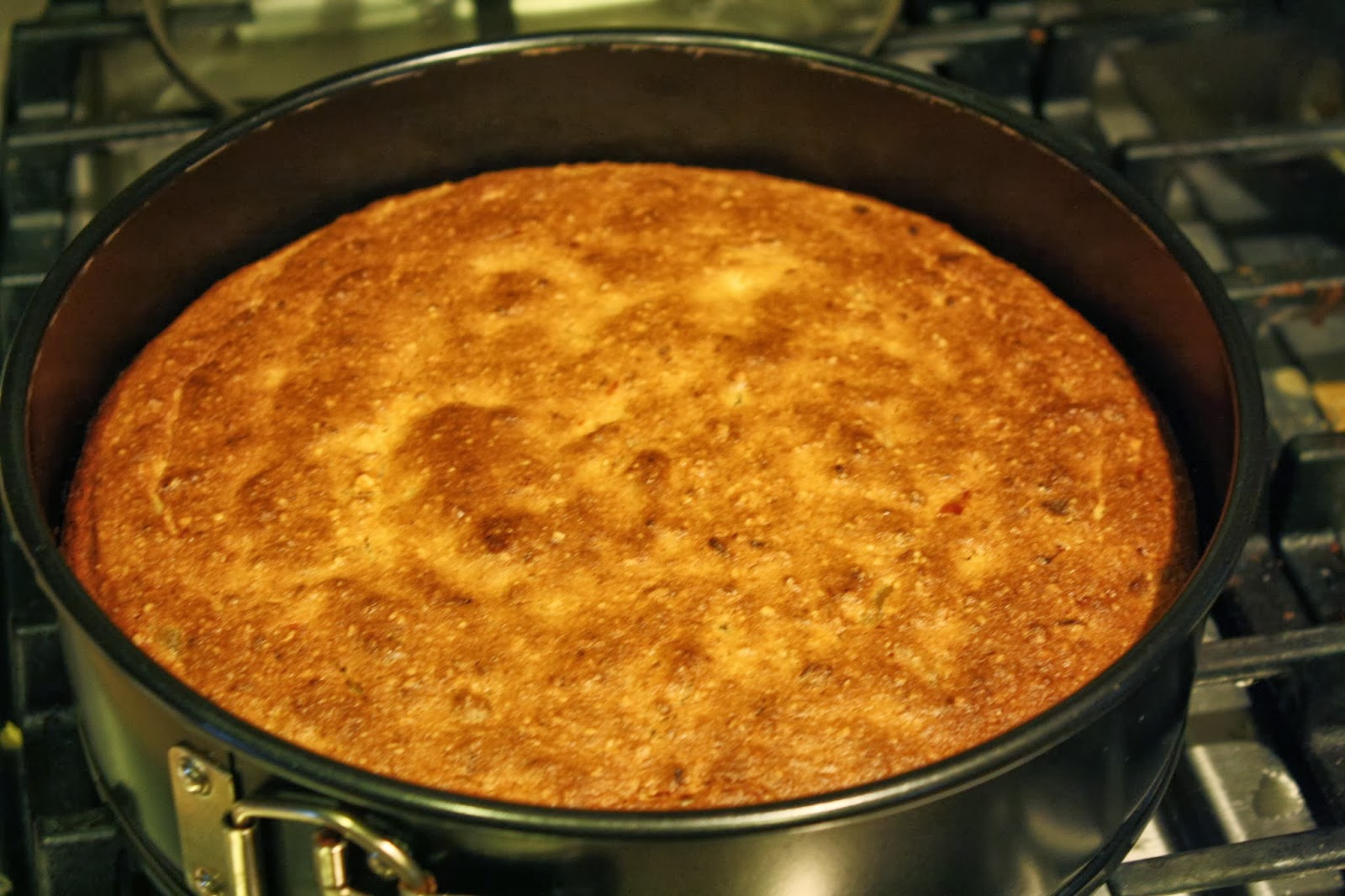
So then I made cake. More specifically, I made this Meyer lemon cake from Food Gal which uses whole lemons, rind and all! They basically replace the butter, while adding a lot of flavor and moisture. The recipe calls for a pound of lemons, which should be about 6 to 8 lemons. In this case, though, since you’ll be eating the whole lemon, I’d recommend getting pesticide-free ones if at all possible. Mine were from my garden, so I wasn’t too worried. I didn’t bother making the lemon glaze (1 Tbsp. Meyer lemon juice + ½ cup powdered sugar). You could also dust the cake with confectioners’ sugar and decorate it with lemon slices, but I served it plain. The Engineer said that the cake had a neat texture, which he described as “granular without being grainy.” I liked the lemon flavor, and thought the almonds came through nicely, too (hence the texture). I’d say this is a bubbie’s Meyer lemon cake, if there was such a thing!

1 pound Meyer lemons
1 ½ cups whole almonds, ground
½ cup flour
1 tsp. baking powder
½ tsp. salt
5 large eggs, separated
1 ¼ cups sugar
½ tsp. almond extract
¼ cup candied or crystallized ginger, finely diced

Put whole lemons in a large pot over high heat, cover with cold water, and bring to a boil. (Let’s be honest here: lemons float. You can’t cover them with water. Just put enough water in the pan that they can move around freely, then cover the pan.) Lower heat to medium and simmer until soft, about 30 minutes. Drain; transfer lemons to a bowl of ice water. Cut lemons into quarters when they have cooled and gently remove seeds, retaining as much juice as possible. Blend lemons in a food processor until they’re a smooth, thick purée.

Preheat oven to 350 °F. Butter and flour a 9-inch springform pan. (I recommend also adding waxed paper on the bottom and greasing that as well, because I couldn’t get my cake off the bottom of the pan.)

In a medium bowl, mix ground almonds, flour, baking powder, and salt. Stir to combine.

Whisk together egg yolks and sugar in a large bowl until thick and pale yellow. Stir in lemon purée and almond extract. Add almond-flour mixture and stir to combine. Stir in candied ginger. Set aside.

Beat egg whites in another large bowl until they form firm peaks. Gently fold egg whites into lemon batter. Spread batter in prepared pan.

Bake until edge of cake begins to pull away from side of pan, about 1 hour. (If the edges begin to brown too quickly, you can tent them with foil.) Cool on a rack for 15 minutes, then remove from pan and cool completely.

Tuesday, January 28, 2014

Meyer Lemon Bars


Alright, since it’s winter and all, you know what that means: Meyer lemons! My Meyer lemon tree has been working overtime producing tons of fruit, to the point where I’m considering just giving it regular fertilizer to boost its overall health this year, instead of fertilizer to boost fruit production… It’s been wonderful to help me work my way through my Meyer lemon recipes, though! I made a Meyer lemon pudding cake before the holidays, but as more lemons matured, I got to adapt these Meyer lemon bars. I used 6 lemons in all (so all the ones in the picture, plus an extra one when I realized I didn’t have quite enough). I like the concentrated lemon flavor here, as it’s a nice way to show off Meyer lemons; that being said, you could make this with regular (Eureka) lemons if you used more sugar, and I’m pretty sure the recipe could be adapted to use other seasonal citrus.

For the crust
1 ¼ cups all-purpose flour
½ cup powdered sugar, plus more to sprinkle on the finished bars
pinch of salt
8 Tbsp. unsalted butter, still cool and cut into 8 pieces

For the filling
7 large egg yolks
2 large eggs
1 cup + 2 Tbsp. sugar
finely grated zest from the Meyer lemons (see below)
2/3 cup Meyer lemon juice (from about 4-6 medium lemons)
½ tsp. salt
4 Tbsp. unsalted margarine, cut in to 4 pieces

For the crust
Cover an 8-inch square cake pan with two sheets of heavy duty aluminum foil, perpendicular to each other. Spray with nonstick cooking spray and set aside.

Put the flour, powdered sugar and salt in a food processor and process briefly, about 2 seconds. Add the butter pieces and process to blend, 8 to 10 seconds, then process until the mixture is pale yellow and resembles coarse meal, about three 1-second pulses. Sprinkle the mixture into the prepared cake pan and press firmly with your fingers into an even layer over the entire pan bottom. Refrigerate for 30 minutes.

Heat the oven to 350 °F. Bake the crust until golden brown, about 25 minutes.

For the filling
In a medium saucepan, whisk together the egg yolks and whole eggs until combined. Add the sugar, Meyer lemon juice, zest and salt until well combined, about 30 seconds.

Add the butter pieces and cook over medium-low heat, stirring constantly with a wooden spoon, until the curd thickens to a thin sauce-like consistency (about 170 °F on an instant-read thermometer), about 6 minutes.

Immediately pour the curd through a fine-mesh steel strainer set over a medium bowl. Pour the curd into the warm crust.

Bake until the filling is shiny and opaque and the center 3 inches jiggle slightly when shaken, about 15 minutes. Cool on a wire rack to room temperature, about 45 minutes. Remove the bars from the pan and transfer to a cutting board. Cut into 2 inch squares, wiping the knife blade clean between cuts as necessary. Sieve powdered sugar over the bars, if you'd like.