Thursday, June 17, 2010

A little help

You may remember hearing me say that I’ve gained weight this past year or so. Recently, Gluten-Free Girl wrote a wonderful post titled “Carry That Weight”, which you should really read. She explains how she’s gained weight over the past year (though I think that anyone in her shoes would have!) and comes to terms with it. She also explains what she’s doing to lose some of that weight.

As for me, I’m more mindful of the portions I serve, and I now give myself the right not to finish my plate. (I’m one of those people who were raised to finish everything on the plate, so this was weird at first. I know other people struggle with this as well.) I dreamily considered a stint in the mountains somewhere after reading that altitude causes weight loss without exercise (it would only be permanent if I moved there, though, and I’m moving to Texas instead). I need to start exercising again. Of course, I absolutely hate gyms, so that’s not going to work for me.

Instead, the Engineer and I got a little help and added to our family this spring. Though these little paws don’t take long walks yet, they do make me go up and down two flights of stairs every few hours!

Les raisons scientifiques qui font que je suis comme je suis

Je pense de temps en temps à combien de mes goûts sont acquis et combien sont innés. J’avais déjà abordé le sujet dans mon billet « Élargir les horizons culinaires ». Là, j’ai un article expliquant que certaines personnes ont un gène faisant en sorte qu’elles n’aiment pas le phénylthiocarbamide, un composé au goût amer présent dans le chou de Bruxelles. Eh bien, je suis convaincue que j’ai ce gène-là. Je n’aime pas le chou de Bruxelles (et le brocoli cuit), il n’y a rien à y faire, je suis comme ça.

Aussi, j’éternue quand je suis aveuglée par le soleil. Selon cet article, 24 % des gens sont comme moi. Nous souffrons de ce qui s’appelle en anglais ACHOO (Autosomal Cholinergic Helio-Ophtalmologic Outburst) syndrome!

En plus, je suis timide, j’ai une mémoire visuelle, je tolère peu le risque et, surtout, je déteste le papotage. C’est vrai, j’ai horreur des conversations de couloir, de parler pour ne rien dire, surtout avec des étrangers. Je veux aller droit au but et continuer ma journée, voilà. Les petites conversations qui ne vont nulle part, je trouve que c’est un excès de politesse inutile et ça me barbe. Et il paraît que ça aussi, c’est dans mon cerveau.

À quand la découverte du gène qui fait que certaines personnes aiment manger et d’autres pas?

Chocolate Mousse


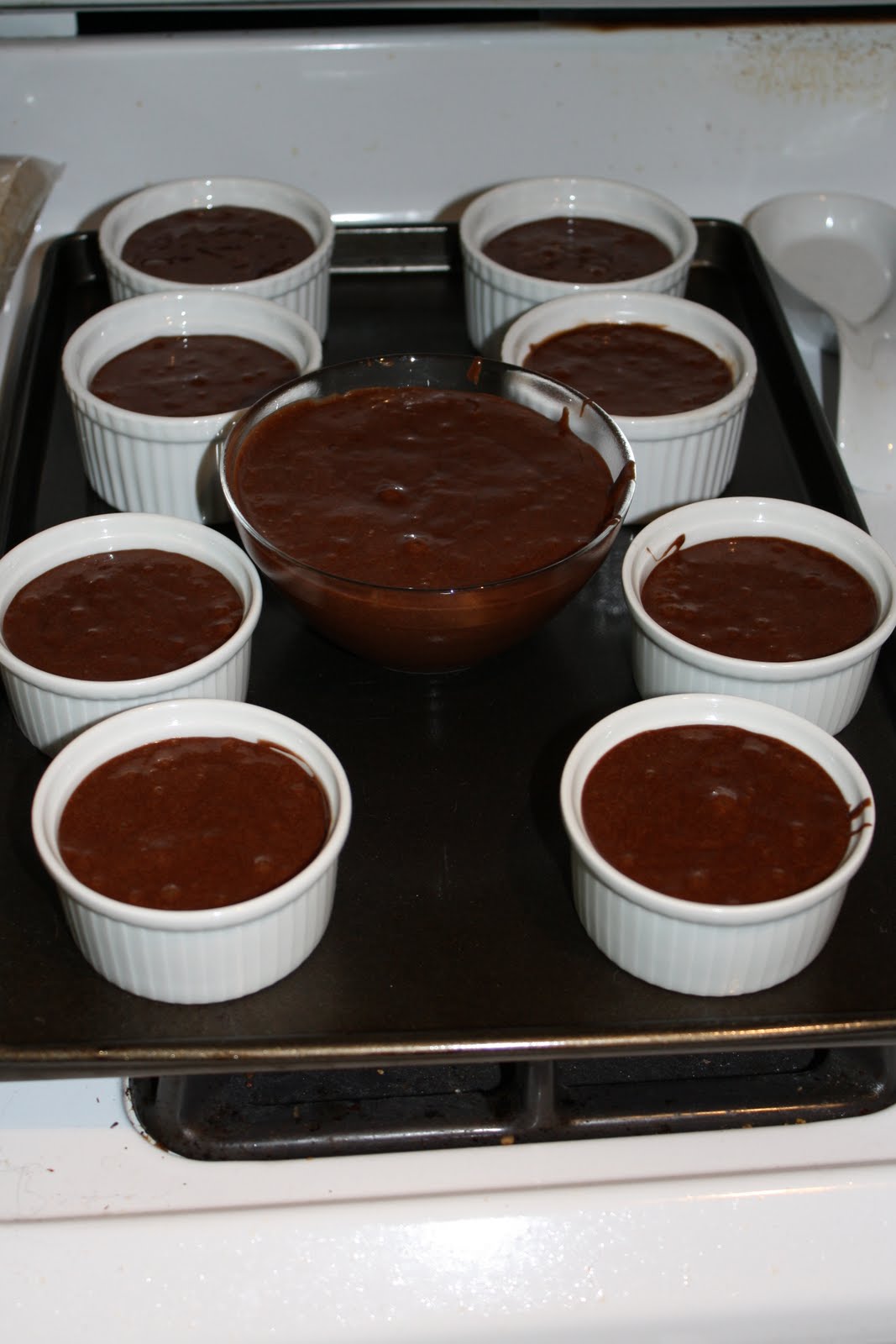
I decided to share the chocolate mousse recipe I make the most often. It is adapted from a recipe in Nigella Lawson’s How to Be a Domestic Goddess. It’s very rich and dense, so I suggest using ramekins rather than bowls to serve it (I ended up filling eight ramekins and then one bowl, which the Engineer and I shared). I make this mousse dairy-free, but it does contain raw eggs. It is really delicious, though, and satisfies my chocolate mousse cravings. (Truth be told, I did have another recipe before that one, but for the life of me, I can’t find it anywhere anymore. Then again, I think that one had orange zest and maybe whipped cream, too, so it’s not the plain dairy-free mousse I want at this point in my life. Nigella’s fits the bill perfectly.)

350 g (12 oz) best dark chocolate
¾ cup (6 oz) margarine or butter
8 large eggs, separated
1 cup sugar
1 Tbsp vanilla extract
a pinch of salt


Melt the chocolate and margarine in a double boiler and let it cool.


In another bowl, beat the egg yolks and sugar until very thick and pale, as creamy as mayonnaise: the mixture should form and fall in ribbons when you lift up the whisk. Stir in the vanilla and salt, and then the cooled chocolate mixture.


In a clean bowl, whisk the egg whites until soft peaks form, then lighten the chocolate mixture with a briskly beaten-in dollop of whites before gently folding the rest of them into it.


Pour the mixture unto ramekins (or bowls) and place them in the fridge for a few hours. Serve cold.


Sunday, June 13, 2010

L'évolution de l'alimentation

Je trouve toujours intéressant d’observer l’évolution des tendances en alimentation. Coup de Pouce a notamment publié un article sur 25 aliments qui étaient presque inconnus au Québec il y a 25 ans, mais qui font aujourd’hui partie de tout livre de recettes (par exemple, la mangue, le lait de coco, le prosciutto, la fleur de sel et le vinaigre balsamique). J’ai aussi lu un article sur Cyberpresse sur les pratiques alimentaires au Québec, qui montrent à la fois une augmentation des produits du terroir et des plats industriels...

C’est vrai qu’on est ce qu’on mange, comme le dit Brillat-Savarin. Voici un site qui montre le frigo de diverses personnes, tout en donnant des explications sur leur mode de vie. Je trouve ça très révélateur, tout comme les listes d’épicerie. Il y a aussi un site qui fait de l’art pop avec des listes d’épicerie anonymes trouvées par-ci par-là; j’aime beaucoup le concept!

Je vous recommande également un article (en anglais, mais illustré) sur l’évolution de la taille des portions au cours des 30 dernières années. Non seulement la taille des portions a augmenté (ainsi que le nombre de calories par portion, donc), mais les prix ont baissé. Et on ne se rend pas compte de ce changement graduel, parce que la taille des assiettes et même celle des aliments vendus en épicerie ont augmenté en parallèle (comme les poitrines de poulet – regardez la bande annonce de Food, Inc. pour voir!). (Si la taille des poitrines de poulet a augmenté, c’est surtout à cause des hormones de croissance administrées aux poules pour qu’elles grandissent vite et que le producteur fasse un maximum de profits en un minimum de temps – une autre raison de préférer le poulet biologique si on peut se le permettre.)

Certains disent qu’il ne faut pas s’en faire, que le gouvernement de notre pays respectif nous protège. Je ne suis pas d’accord. Ce serait vrai si tous les gouvernements avaient non seulement le même souci de protection du public et la même autorité, mais aussi les mêmes règles. Certains pays permettent la vente de produits contre lesquels il n’y a encore aucune plainte, mais je trouve bien plus logique le système des pays qui interdisent un aliment jusqu’à ce que son innocuité soit prouvée. Par exemple, voici un article dressant la liste de 7 choses qui sont interdites en Europe, mais toujours permises aux États-Unis : les OGM, les pesticides, les hormones de croissance bovines, les poulets nettoyés au chlore, les produits chimiques potentiellement toxiques en contact avec la nourriture (comme le bisphénol-A et les phtalates), le stevia et les colorants alimentaires. Honnêtement, si l’Europe les interdit, je vois mal sur quelle base les États-Unis et d’autres pays les permettent!

Une autre chose à noter est que de nos jours, beaucoup plus d’enfants ont des allergies alimentaires qu’il y a 50 ans. On peut penser que c’est à cause de tous les produits artificiels et transformés qu’on ingère de nos jours, ou que c’est pour une autre raison, mais toujours est-il qu’il faut maintenant tenir compte de cela en cuisinant pour d’autres. Je me rappelle le billet de Lucie sur le sujet ainsi que le commentaire de Marie l’urbaine, sous ce billet, où celle-ci explique que son père a failli provoquer des réactions allergiques chez deux personnes en ne prenant pas au sérieux leur allergie alimentaire (et même qu’une mère a failli donner de la meringue à sa fille allergique aux œufs – c’est pas fort, ça : quand on a un enfant allergique, on ne lui donne quelque chose à manger que si on SAIT que cela ne contient pas d’allergène, pas de chances à prendre avec ça, voyons!). Je vous donne donc un lien que j’ai beaucoup aimé : 10 choses que les enfants qui ont des allergies alimentaires aimeraient que vous sachiez.

Food preparation

I decided to do a short post on food preparation and food safety. I still often meet people who are unaware of the potential dangers of a piece of meat that hasn’t been cooked properly, for example. One can’t use just any fish to make sushi, and one can’t use just any beef from the grocery store to make steak tartare. With very few exceptions, it is always safer to thoroughly cook meat.

Let’s focus on ground beef for a moment. It is true that E. coli infections are rare. And I do prefer a hamburger patty to be slightly pink and juicy rather than too dry. But then there are stories like Stephanie Smith’s, who is now paralysed because of a packaged hamburger patty that was contaminated. Cases like this are more likely to happen when various cuts of meats are used to make the patties, because it increases the odds of low-grade meat and even feces of becoming part of the finished product. And yet, that’s still what’s on the market, and it’s perfectly legal. People say that it’s much safer to grind one’s own meat from a high-quality cut, but how many home cooks actually do that?

You can’t control the quality of prepared foods you buy, but you do have control over the ingredients in your own home. If you are concerned about such things as cross-contamination and food storage in your kitchen, you can take the LA County’’s Health Grade Test to see how it fares. This test is a real eye-opener! You should also know how to store things in your fridge (raw meat goes on the bottom, so it doesn’t drip onto other foods, foods that need the least refrigeration go in the fridge door because it’s the warmest, etc.). And of course, use different cutting boards for meat and vegetables.

There are also bacteria that develop on items that are already in one’s home, even if they are stored properly. Is the expiry date on a product just a suggestion? A helpful website called Still Tasty helps you figure out the shelf life of various products, as does this handy chart. But when in doubt, throw it out!

Foodie links

I have TONS of sites bookmarked, so I figured I would share them with you. That way, if I forget about one of them, you can remind me! Hopefully you’ll find something in there to like as well.

- Top 15 social media resources for foodies: websites to buy food, learn how to cook it and where to eat it.

- 100 best websites for chocolate fanatics: with educational content as well as blogs, recipes and stores.

- A CNN article about cravings for hard-to-find ingredients and the websites where they can be bought, also taking into consideration eating locally and carbon footprints.

- Secret Stash Sea Salts, which was recommended once by Gluten-Free Girl, has the greatest salt flavours you could think of. I since found vanilla salt someplace else, and made my own lavender salt. I hope these inspire you!

- The 2010 Saveur 100 list: a list of 100 foods, recipes, restaurants, articles, websites, etc., that every foodie should read. I’m working my way through it.

- An online guide to allergy-friendly restaurants (only the US so far, but it’s a start!).

- How to cut a bagel into two linked halves.

- Butch Bakery in New York, for those of you who want manly cupcakes.

- Jim makes the coolest pancakes for his daughter, Allie.

- Here are the names of all the pasta shapes.

- The Star Trek Cookbook. If it weren’t for the valid concerns raised in the reviews (namely the lack of oversight by the editors and the fact that this book was cobbled together to make money rather than assembled by fans of the franchise who actually had good recipes), I would have bought it.

- A cake server that lets you cut a piece of cake, then gracefully pick it up and deposit it upright on a plate. I’d love to read reviews on this item to see if it works as well as advertised (if so, I need one!).

- Pour les Québécois : IGA s’est associé à l’Union des producteurs agricoles. Vous pouvez donc commander des produits du terroir de partout au Québec et les faire livrer au IGA le plus près de chez vous. Pratique, non?

- Finally, I don’t know how many of you actually have bamboo steamers are home, but if you do, Martha Stewart suggests two alternate uses for them: use them as pie carriers (brilliant!) or use them to store garlic and shallots.

Saturday, June 12, 2010

Clever Cupcakes

Remember that post I did about Montreal cupcakes? In the comments, I also mentioned a company called Clever Cupcakes – no storefront yet, but business is booming. Well, I just wanted to mention that they have a photostream of their cupcakes! I haven’t actually tasted any of them, but I’m seriously impressed by their appearance. I mean, there are cupcakes for movie night, for ballerinas, for junk food and for doctors. It’s like a miniature version of Cake Boss!

The Bechdel test for women in movies

I wanted to share this video I saw recently about the Bechdel test for women in movies. The premise is simple: in order to see to what degree women are represented as whole persons in movies, one can ask 3 questions about said movie:
1- Are there at least two women in the movie, and do they have names?
2-Do they talk to each other?
3-Do they talk to each other about something other than men?
It is very interesting to see how many movies fail this simple test. And don’t get me wrong: I’m not saying that a movie that fails this test is a bad movie or anything! To name just one that doesn’t pass this test and that I absolutely love: Back to the Future. I’m just saying that this has made me realize how underrepresented (or stereotyped) women are in movies. The same could be said about the elderly, for example. It’s food for thought.

Of course, a movie “made for guys”, like Fight Club, can be good in its own right. And sure, there are movies “made for women”, like Fried Green Tomatoes, that are wonderful. I do wonder, though, not only why the former trump the latter, but also why women might watch either while men prefer the former...

Miso Slaw


You might remember how I hated broccoli and then discovered the one recipe in which I came to like it. Well, here’s another one to add to the (very, very short) list! This salad has a decidedly Asian feel and is more umami than sweet. I guess its similarity to the other recipe I like is that the broccoli is served raw, in chopped up pieces. So this slaw (recipe from The Kitchn) originally called for a package of Trader Joe’s broccoli slaw. Since I have no clue what that’s like (we don’t have Trader Joe’s here, and I haven’t seen ready-made broccoli slaw in stores), I improvised: I peeled the outer part of the tough broccoli stem and grated it (florets included) in the food processor, then added a few peeled carrots. That’s what my recipe will be from now on. Also, note that I had black miso, not yellow or red, so the dressing is quite dark, but it’s still very good. As always, I recommend you assemble the salad only as you eat it – so keep the greens, the almonds (if using) and the dressing separate for storage, it’ll stay fresh longer.


Miso dressing
1/3 cup rice vinegar

3 Tbsp miso
3 large garlic cloves, peeled

2 tsp sugar

2 tsp chopped fresh ginger
2 tsp sesame oil
2 tsp soy sauce
¼ cup olive oil
¼ cup mayonnaise (or vegan substitute)

Mix everything in a food processor.


Salad ingredients
1 bunch of broccoli, peeled and grated
2 carrots, peeled and grated
½ bunch green onions, chopped
4 cups chopped spinach
½ cup finely chopped roasted almonds (optional)

Mix dressing and salad ingredients in a large bowl. Garnish with almonds and chill.


Spaetzle


Don’t ask me how to pronounce this, I wouldn’t know. I just made’em and ate ‘em. Spaetzle are a type of German dumpling similar to pasta. They look like they would be great served with meat sauce, but I served them with tomato sauce here and it was really good. I think it’s a good idea to pan-fry them once they’re boiled, otherwise it could be a bit bland (although you could also add some herbs to the batter). We had enough for two people with this recipe, found through The Kitchn and adapted slightly (you could use plain yogurt or ricotta instead of the milk here – it’s a very forgiving recipe). Note that the spaetzle do plump up quite a bit in the water, so make the pieces of raw dough smaller than you want.

1 cup flour
½ tsp salt
2 eggs
½ cup milk
2 Tbsp water

Set a large pot of water to boil. Whisk the flour and salt together.


In a separate cup whisk the eggs with ricotta and water until very smooth and frothy. Add to the flour and whisk to combine. The batter will be thin but gluey - thicker than pancake batter.


When the water is boiling, scoop the tip of a teaspoon into the batter and drop quickly into the water, pushing the batter off with your finger. Repeat, quickly, until the top layer of water is nearly full of bobbing spaetzle. Let them boil for about two minutes, or until they all float to the top. Remove with a slotted spoon and repeat with the rest of the batter. Cut into one to make sure it's done. Don't worry too much about overcooking these; just try to get them out within a few minutes.


Toss with a small drizzle of butter or meat drippings and serve hot. You can also pan-fry them with some butter until they’re slightly crispy on the outside, then serve with sauce and parmesan cheese.


Seven-Year Granola


I know I’ve already posted two granola recipes in the past six months (the chocolate chip granola and Mom’s granola). I’ve been looking for a new recipe, and I’ve made several already. There’s been this one, and that one; both of them were good, but nothing to get ecstatic about. I’ve got a lot more recipes bookmarked and I’ll get around to trying them too eventually. However, I came across one recipe that I just had to share: the Seven-Year Granola (do read the story behind the name, it’s wonderful and very well written).

The secret behind this granola, apart from the spices, is the use of oat flour, which helps create small clusters in the granola. Also, this recipe calls for sugar instead of liquid sweeteners, and the result is granola that is more crispy than chewy. You will need quick oats, not rolled oats (click here for a great illustrated guide to oats). For the nuts, I used a mixture of pecans and almonds (about 2 cups and 1 cup, respectively), but you can change that depending on what you have on hand.

1 lb (450g) quick oats
3 cups coarsely chopped raw nuts and/or seeds
1 tsp ground cinnamon
½ tsp ground cardamom
½ tsp ground mace
1 cup, packed dark brown sugar
½ cup (1 stick) unsalted butter or margarine
1/3 cup water
½ tsp fine salt
2 tsp vanilla extract
dried fruit, at your discretion

Preheat the oven to 300 °F.

In a food processor, coffee grinder or blender, grind half the oats to a fine powder. In a large bowl, combine the whole oats, ground oats, nuts, seeds and spices.


In a saucepan over medium heat, combine the brown sugar, butter and water and heat just until the butter has melted and the mixture is bubbly. Stir the mixture together until smooth, then stir in the salt and vanilla.


Pour the wet mixture over the oats and nuts, stirring well to coat (you can use your hands). It should be uniformly moist - stir in another tablespoon or two of water if it isn't. Let stand for about ten minutes.


Spread the mixture out on a large baking sheet lined with parchment paper, separating it into irregular clumps with your fingers, and allowing space between the clumps for the hot air to circulate. Slide into the middle of the oven and bake for 25-30 minutes, or until the top is golden brown. Remove from the oven and stir, gently breaking up the mixture into small-to-medium sized clumps. Return to the oven and bake another 15 minutes or so before stirring again. Repeat the bake-and-stir until the mixture is a uniform golden brown and completely dry; this usually takes 1-1 1/2 hours. Cool completely, then stir in any dried fruit you want to use.


Store in a covered container at room temperature. Serve with milk or plain yogurt and fresh fruit as desired.

Chocolate Rads


What’s this? Another chocolate cookie? Well, yes... But this recipe is Molly Wizenberg’s, so how was I expected to resist? The only “problem” with this recipe (if one can call it a problem) is that it makes close to 4 dozen cookies; they freeze well, though, so I recommend that course of action if they must remain in a two-person household. Also, ideally, do as I say, not as I do: since chocolate is the main ingredient here, use the best quality you can find. As for me, I desperately have to empty my pantry before the move to Texas, so I used three different kinds of chocolate, at least one of which the Legal Chef would object to. The cookies were great, though, I’m certainly not complaining!

1 lb bittersweet chocolate, chopped
1 ¾ cups granulated sugar
4 large eggs
4 Tbsp unsalted butter or margarine, melted and cooled slightly
1 Tbsp pure vanilla extract
1 tsp instant espresso
½ cup cake flour
1 tsp baking powder
¼ tsp salt
2 cups good-quality semisweet chocolate chips


In the top of a double boiler or metal bowl set over gently simmering water, melt the bittersweet chocolate, stirring until smooth. Remove from heat, and set aside.


In a large bowl, combine the sugar and eggs, and beat with an electric mixer until thick and pale yellow, about 3-5 minutes. Add the melted chocolate, melted butter, vanilla extract, and espresso powder, and beat to mix thoroughly.


Sift the flour, baking powder, and salt into small bowl. Add the dry ingredients to the chocolate mixture, and stir with a rubber spatula to just combine. (The batter will be fairly gluey and thick.) Stir in chocolate chips. Place the bowl in the refrigerator, and chill until the batter is firm but not too hard, about 30 minutes.


Preheat the oven to 350 °F. Line two large cookie sheets with parchment paper. Drop the batter with a spring-loaded ice cream scoop – about 2 Tbsp per scoop – onto the prepared sheets, leaving about 2 inches of space around each blob of dough. With moist fingertips, press down on each blob to flatten it slightly. Bake the cookies until tops look dry and crackled, about 11-13 minutes. Do not overbake. Transfer the cookies on the parchment paper to a wire rack, and allow to cool completely. Repeat with remaining dough. Remove finished cookies from the parchment paper, and store them in airtight container.


Note: These cookies freeze beautifully, and they can be frozen for up to a month. Allow them to come to room temperature before serving or eating.

Tuesday, June 08, 2010

Petits gâteaux au fromage de chèvre


Tout comme la recette de soufflés renversés au fromage de chèvre, celle-ci me vient d’un dépliant publicitaire livré avec mon Coup de Pouce. Je l’ai modifiée quelque peu, en utilisant du fromage de chèvre Damafro sans lactose et en omettant le blanc d’œuf et le rhum. J’ai aussi utilisé de la chapelure de biscuits Graham (il m’en restait pile une tasse) au lieu de doigts de dame et du yogourt sans lactose au lieu de la crème sûre. Quand même, j’ai trouvé ça délicieux, et ça m'a rappelé à quel point j’aime les gâteaux au fromage (que je ne me permets plus vraiment depuis que je suis intolérante au lactose). Ces petits gâteaux peuvent aussi être congelés (il faudrait alors les laisser dégeler une heure avant de les manger).

1 tasse de chapelure de biscuits (Graham, doigts de dame ou au goût)
3 c. à soupe de beurre ou de margarine, fondu(e)
400 g de fromage de chèvre (sans lactose)
½ tasse de sucre
2 œufs
2 c. à thé d’essence de rhum (facultatif)
½ tasse de crème sûre ou de yogourt (sans lactose)
2 c. à soupe de lactose
cacao (pour décorer)
petits fruits (pour décorer)


Préchauffer le four à 325 °F. Garnir 12 moules à muffins de papier ondulé.

Dans un bol, mélanger la chapelure et le beurre. Répartir le mélange dans les moules à muffins et presser avec le dos d’une cuillère en couche uniforme.

Dans un bol, battre le fromage de chèvre, le sucre, les œufs et l’essence de rhum jusqu’à ce que le mélange soit homogène, environ 2 minutes.


Répartir le mélange dans les moules à muffins. Cuire au centre du four 30 minutes ou jusqu’à ce que le mélange soit pris.


Dans un bol, mélanger la crème sûre et le sucre. Lorsque les gâteaux sont cuits, les retirer du four et répartir le mélange sur les 12 petits gâteaux. Remettre au four et cuire encore 5 minutes. Laisser tiédir à température ambiante, puis réfrigérer au moins 2 heures.


Démouler délicatement, retirer les caissettes de papier et saupoudrer d’un nuage de cacao. Coiffer de petits fruits.